



Moon Salutation (Chandra Namaskar): the main versions compared

Moon salutations (Chandra Namaskar) have no single fixed order: the Kripalu moon salute, its gentle and seated versions, and a different forward-and-back version, with sources.

Not yet reviewed by a qualified teacher Names and order checked against 4 sources

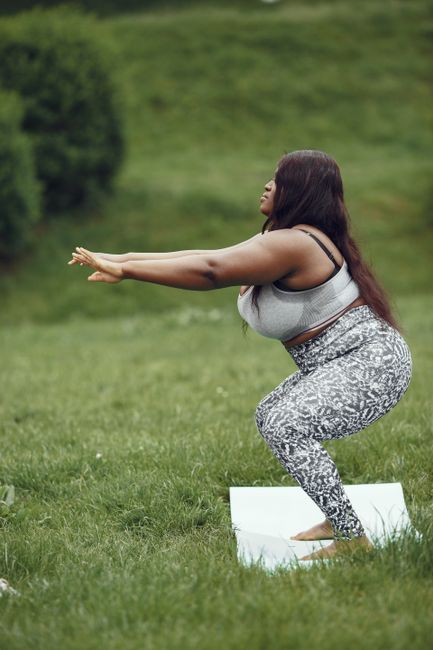
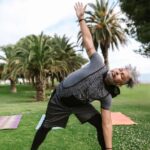
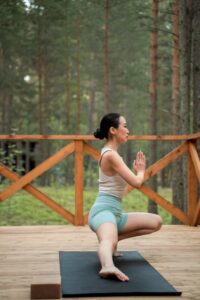
Curvy woman practicing yoga on a mat in a green park setting, embodying healthy lifestyle.
Sanskrit name
Candra Namaskāra (source)
Also called
Moon Salute, Moon Sequence, Chandra Namaskar, Chandra Namaskara
Tradition
Modern; versions from Kripalu, ParaYoga and others
Order
Traditional, but varies by school
Level
Beginner, Intermediate
Approximate duration
about 10 minutes
Focus
Evening
Audience
Beginners, Experienced
Props
Block, Mat
Styles
Hatha Yoga: The Historical Term and the Modern Class
Body areas
Hips, Legs, Spine

Traditional, but the order and details vary between schools. This page follows the version named below.

Printable view

Origin and source

No single origin. The Kripalu moon salute was created at Kripalu in the late 1980s by Megha Nancy Buttenheim, Deva Parnell, Patricia (Niti) Seip Martin and Bhumi Harriet Russell (Kripalu). Other versions, e.g. Karina Mirsky (ParaYoga) in Yoga International, follow a different order.

Who it is for

Comfortable in wide-legged standing poses, triangle and a lunge; knees that tolerate squatting. Gentle and seated versions for everyone else.

The steps in order

Version shown: Steps shown: the Kripalu classical moon salute (overview level); other versions described in the copy

#StepBreathSideCues and options
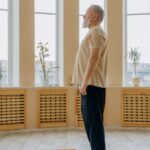
1Mountain, hands in prayer
Tāḍāsana
Free breathing

Transition: Stand with the feet together.

Easier option: Feet hip-width.

2Standing side bend ("half moon" at Kripalu), right then leftExhaleEach side

Transition: Arms overhead, palms together, bend to each side.

Easier option: Hands on the hips.

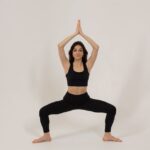
3Goddess squatExhale

Transition: Step wide, toes out, bend the knees, elbows bent and hands up.

Easier option: Bend the knees less.

4Five-pointed starInhale

Transition: Straighten the legs, arms out at shoulder height.

Easier option: Narrower stance.

5Triangle, right
Utthita Trikoṇāsana
ExhaleRight

Transition: Turn the right foot out and reach over the right leg.

Easier option: Hand on a block or the shin.

6Standing runner's stretch, right
Pārśvottānāsana
ExhaleRight

Transition: Turn to face the right leg and fold over it.

Easier option: Hands on blocks.

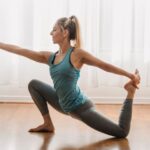
7Runner's lunge, right
Āñjaneyāsana
InhaleRight

Transition: Bend the right knee, hands down, back knee up or down.

Easier option: Back knee down on a blanket.

8Wide squat with one leg extended (to the left)
Skandāsana
ExhaleEach side

Transition: Turn to the side, one knee bent, the other leg long with the toes up; shift across.

Easier option: Hands on blocks; shallow squat.

9Mirror on the left: lunge, runner's stretch, triangle, star, goddess, side bends, mountainFree breathingLeft

Transition: Retrace the sequence on the left side.

Easier option: Use the gentle moon salutation if the squats are too deep.

Left and right

Kripalu: right side first (triangle, runner's stretch, lunge to the right), then the mirror image to the left in the same round.

Repetitions and counting

Kripalu: one round goes to the right side and returns through the centre to the left, then back to mountain; repeat at your own pace (Kripalu gentle version); the seated version suggests two more repetitions after the first.

Props and adaptations

Blocks under the hands in the lunges and squats; shallow squats; back knee down in the lunges; gentle and seated versions available.

Precautions

  • Knees and hips: the classical Kripalu version includes deep squats and lunges; keep the knees over the toes and reduce depth.
  • Balance: practise near a wall if wide stances feel unsteady.
  • Pregnancy, recent injury or surgery: ask a qualified teacher or health professional.

Learn it with a teacher: Learn the Kripalu version in a class if possible; the transitions between wide stances are easier to follow with guidance.

General information, not medical advice. Poses do not cure illness. If you are pregnant, injured or have a health condition, check with your doctor and tell your teacher before you practise.

Beginner and chair alternatives

Gentle Moon Salutation: a standing flow based on Kripalu’s version, Seated Moon Salutation: a chair flow based on Kripalu’s version

A moon salutation (Chandra Namaskar) is a flowing sequence offered as a counterpart to the sun salutation: usually slower, often practised in the evening, and in its best-known form done standing, moving from side to side rather than forward and back. Unlike Sun Salutation A in Ashtanga, there is no single fixed order. Different schools teach quite different sequences under the same name, and this page shows the main ones with their sources.

The step list on this page is the Kripalu version, because it is the most widely published one with a named origin. Its full page is the Kripalu moon salutation.

The name

Chandra means moon in Sanskrit and namaskar means greeting or salute, as in Surya Namaskar. The Sanskrit name is used widely in modern classes, but it is a name for modern sequences rather than a posture from the old hatha yoga texts. We know of no evidence that any moon salutation is ancient, and the best-documented one has a specific modern origin.

Version 1: the Kripalu moon salute

Kripalu Center for Yoga & Health states that its moon salute was created at Kripalu in the late 1980s by a group of teachers including Megha Nancy Buttenheim. It is a standing, side-to-side sequence: from mountain pose with the hands in prayer, a standing side bend (called half moon at Kripalu) to each side, a goddess squat, five-pointed star, triangle, a standing runner’s stretch over the front leg, a runner’s lunge, then a wide squat with one leg extended, and back again through the same poses on the other side. The flow is mirrored, so one round covers both sides. Bernie Clark’s YinYoga.com publishes a moon salutation “based on the Kripalu tradition” with the same arc, adding a central squat between the two sides.

Version 2: Kripalu’s gentle and seated moon salutes

Megha Nancy Buttenheim later modified the classical sequence into a gentle standing version (without the deep squats and runner’s lunges, adding Warrior I and II) and a seated version done in a chair. Kripalu publishes both. Our gentle moon salutation and seated moon salutation pages follow them.

Version 3: a forward-and-back moon salutation

Other teachers use the name for something closer to a slow sun salutation. Yoga International publishes a meditative moon salutation by ParaYoga teacher Karina Mirsky that moves forward and back: standing, a fold, a lunge with the arms raised, downward dog, tabletop, child’s pose, a kneeling backbend, upward-facing dog and back up through the lunge, with a moon visualisation at the start and end. It shares the name, not the order, with the Kripalu sequence. Iyengar, Bihar and other schools have their own uses of the term; we will add them only once we have checked a source.

How counting and sides work

In the Kripalu versions one round travels to one side and back through the centre to the other, so both sides are done in each round. Kripalu’s gentle version suggests repeating at your own pace; its seated version suggests two more repetitions after the first. Moon salutations are usually practised slowly, with a full breath for each movement; many teachers use them as a cooling or evening practice, though that is a teaching choice, not a rule.

Practising safely

The deep squats and runner’s lunges of the classical Kripalu version ask a lot of the knees and hips. Keep the knees tracking over the toes, use a block under the hands in the lunges, and rise higher in the squats. Choose the gentle or seated version if the knees, hips or balance are a concern, and stop with any sharp pain. These pages have not yet been reviewed by a qualified teacher.
Frequently asked questions

Is there one correct moon salutation?

No. Different schools teach different sequences under the name Chandra Namaskar. The best-documented is the Kripalu moon salute, created at Kripalu in the late 1980s.

What is the difference between a sun and a moon salutation?

Traditional sun salutations move forward and back between standing and the floor. The Kripalu moon salute stays standing and moves side to side through goddess, star, triangle and lunges. Some other moon salutations are closer to a slow sun salutation.

Is the moon salutation ancient?

We have found no evidence for that. The best-documented version, Kripalu's, dates from the late 1980s.

Sources

  1. Chandra Namaskar: Honoring the Moon Salute (creators, late 1980s, classical sequence), Kripalu Center for Yoga & Health (accessed October 6, 2026)
  2. Variations on the Moon Salute: Gentle and Seated Versions, Kripalu Center for Yoga & Health (accessed October 6, 2026)
  3. A Moon Salutation (based on the Kripalu tradition; "many versions"), Bernie Clark, YinYoga.com (accessed October 6, 2026)
  4. A Meditative Moon Salutation (Karina Mirsky, ParaYoga), Yoga International (accessed October 6, 2026)

Facts checked on October 6, 2026