Morning Yoga: a 15-minute wake-up sequence

A newly designed 15-minute morning yoga sequence: gentle floor warm-ups, cat-cow, downward dog, two beginner sun salutations, a lunge, tree pose and a seated pause.

Not yet reviewed by a qualified teacher Needs verification: names and instructions not yet confirmed by two sources

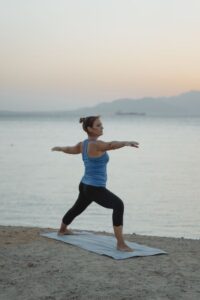
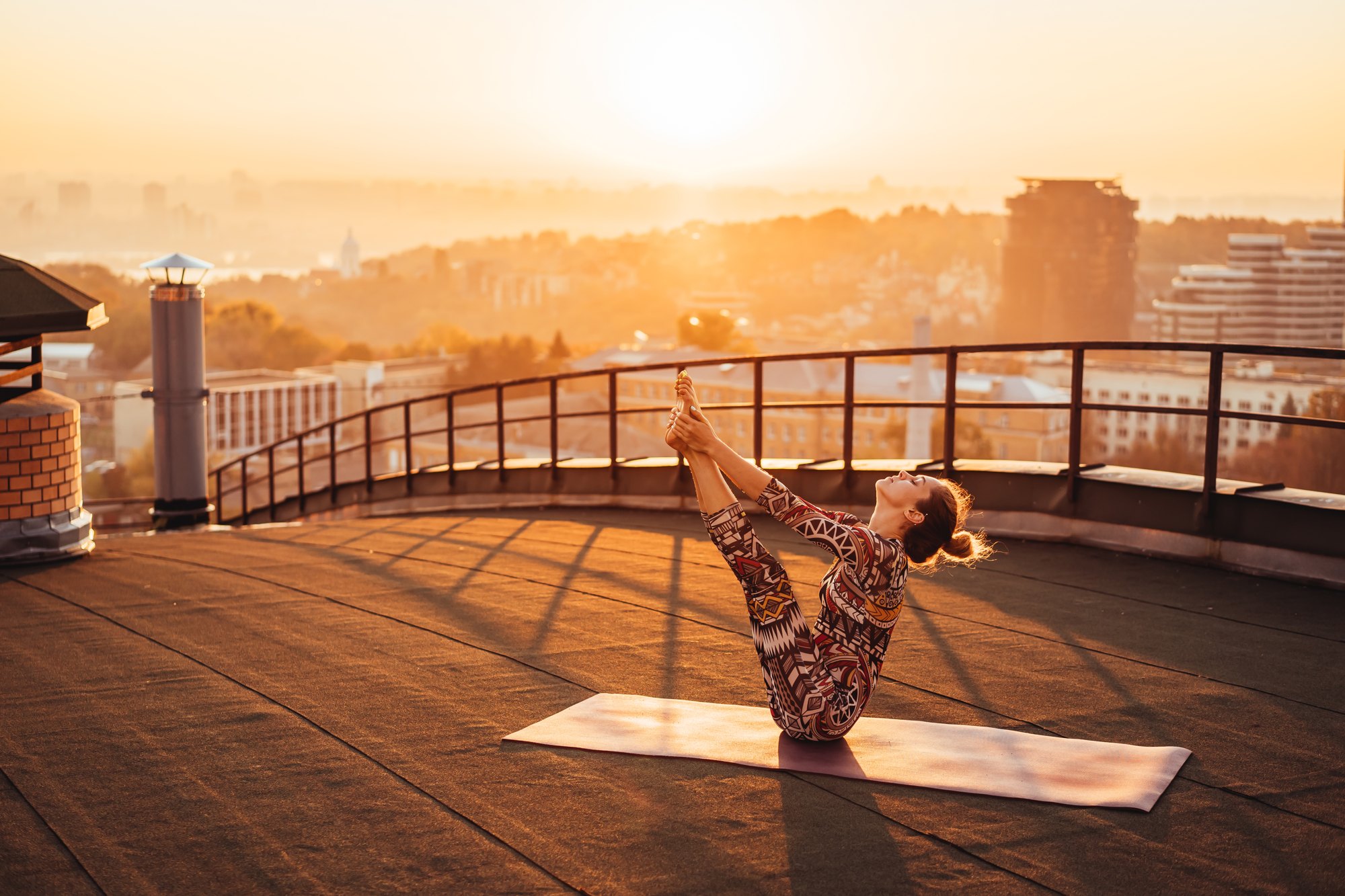
Morning yoga on a rooftop terrace at sunrise
Also called
Morning Sequence, Wake-Up Yoga
Tradition
Modern hatha (YogaVacation educational flow)
Order
Newly designed educational flow
Level
Beginner
Approximate duration
about 15 minutes
Focus
Morning
Audience
Beginners
Props
Blanket, Block, Mat
Styles
Hatha Yoga: The Historical Term and the Modern Class, Vinyasa Yoga: Flow, Breath and What to Expect
Body areas
Hips, Legs, Shoulders, Spine

A newly designed educational flow, not a traditional sequence. Teachers order these poses in many ways.

Printable view

Origin and source

Newly designed by YogaVacation (2026). There is no traditional morning sequence.

Who it is for

Able to get down to and up from the floor and take some weight on the hands.

The steps in order

Version shown: YogaVacation morning yoga: supine breathing, knees to chest, cat-cow, downward dog, two beginner sun salutations, low lunge, tree, seated pause

#StepBreathSideHoldCues and options
1Lying on the back, easy breathing
Śavāsana
Free breathing1 minute
YogaVacation (suggested)

Transition: Knees bent, hands on the belly; slow the exhalation.

2Knees to chest, gentle rocking
Pavanamuktāsana
Free breathing5 breaths
YogaVacation (suggested)

Transition: Hug both knees in and rock side to side.

Easier option: One knee at a time.

3Cat-cow
Marjaryasana-Bitilasana
Free breathing6-8 rounds
YogaVacation (suggested)

Transition: Roll to the side and come to hands and knees. Inhale arch, exhale round.

Easier option: Forearms down for sore wrists; blanket under the knees.

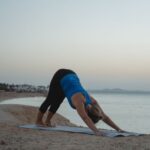
4Downward dog, pedalling the feet
Adho Mukha Śvānāsana
Free breathing5 breaths
YogaVacation (suggested)

Transition: Tuck the toes, lift the hips, bend one knee then the other.

Easier option: Knees well bent; hands on a chair seat.

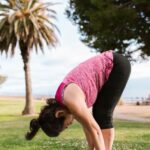
5Walk to a standing forward fold, roll up
Uttānāsana
Exhale3 breaths
YogaVacation (suggested)

Transition: Walk the feet to the hands, hang with soft knees, roll up slowly.

Easier option: Hands on the thighs.

6Beginner sun salutation, 2 rounds sequenceFree breathingEach side2 rounds (right leg leads, then left)
YogaVacation (suggested)

Transition: Start in mountain at the front of the mat.

Easier option: Gentle standing sun salutation instead.

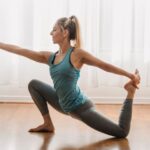
7Low lunge
Āñjaneyāsana
InhaleEach side3-5 breaths each side
YogaVacation (suggested)

Transition: Step the right foot forward, back knee down, lift the chest. Then left.

Easier option: Hands on blocks; blanket under the back knee.

8Tree
Vṛkṣāsana
Free breathingEach side3-5 breaths each side
YogaVacation (suggested)

Transition: Stand, place the right sole on the inner left calf or thigh (not the knee). Then left.

Easier option: Toes on the floor, heel on the ankle; hand on a wall.

9Seated pause
Sukhāsana
Free breathing1-2 minutes
YogaVacation (suggested)

Transition: Sit cross-legged on a cushion, eyes closed or soft.

Easier option: Sit on a chair.

Left and right

Sun salutation: right leg leads in round 1, left in round 2. Low lunge and tree: right, then left.

Repetitions and counting

Moving steps 5-8 breaths; held steps 3-5 breaths; sun salutation twice (right leg leads, then left). One pass.

Props and adaptations

Blanket under the knees; forearms or fists for sore wrists; hands on a chair in downward dog; wall for tree; cushion for sitting; standing or chair sun salutation instead of the floor version.

Precautions

  • Move slowly in the first minutes after waking.
  • Low blood pressure or dizziness: come up from folds slowly.
  • Wrist pain: forearms, fists or blocks.
  • Back problems, pregnancy or recent surgery: ask a qualified teacher or health professional.

Learn it with a teacher: A teacher can check your sun salutation and lunge alignment once, which makes daily home practice safer.

General information, not medical advice. Poses do not cure illness. If you are pregnant, injured or have a health condition, check with your doctor and tell your teacher before you practise.

Beginner and chair alternatives

Gentle Standing Sun Salutation: no floor work, with a wall, Chair Yoga Sequence: a 20-minute seated routine

This morning yoga sequence is a 15-minute routine to wake the body gently: a few breaths lying down, cat-cow, downward dog, two easy sun salutations, a lunge and a standing balance, and a short seated pause. It is a newly designed educational sequence by YogaVacation. There is no traditional “morning sequence”; many yoga schools simply recommend practising in the morning, and the sun salutation is the classic morning practice in several of them.

How the sequence is built

After sleep the spine and hips are often stiff, so the routine starts on the floor with small movements, rises through hands-and-knees to standing, and only then adds the larger movements of the sun salutation. It ends with a balance to wake up attention and a minute of sitting still. Use the beginner sun salutation (knees down, cobra, stepping) for the two rounds; if you already know it, the 12-position sun salutation works as well.

The routine, step by step

On the floor (about 3 minutes). Lie on your back with the knees bent and the hands on the belly, and breathe easily for a minute, letting each exhalation grow a little longer. Then hug both knees to the chest and rock gently from side to side for about five breaths; this wakes up the lower back without asking much of it.

Hands and knees (about 3 minutes). Roll to one side and come to cat-cow: inhale to arch, exhale to round, six to eight times. Tuck the toes and lift into downward dog, bending one knee and then the other to “pedal” the feet for about five breaths. Walk the feet to the hands, hang in a soft-kneed forward fold for three breaths and roll up slowly, head last.

Standing (about 7 minutes). From mountain pose, do two rounds of the beginner sun salutation, the first leading with the right leg and the second with the left. Then take a low lunge on each side for three to five breaths, and finish standing with tree pose on each side, the foot on the calf or inner thigh, never on the knee.

Seated (about 2 minutes). Sit cross-legged on a cushion, or on a chair, and rest with the eyes closed or soft. Notice the breath and how the body feels compared with when you started.

What the traditions say about practicing in the morning

Two classic manuals agree that morning is a good time, and are honest about why it can feel hard. In Light on Yoga, B.K.S. Iyengar writes that the best time to practice is early in the morning or late in the evening; in the morning the body is stiff and poses do not come easily, but the mind is fresh, and regular practice overcomes the stiffness. He also suggests that morning practice helps you work better during the day. The Bihar School’s Asana Pranayama Mudra Bandha says the stomach should be empty for asanas, at least three or four hours after food, and notes that this is one reason early morning practice is recommended. The Bihar book also asks you to breathe through the nose and never to use force or strain. That is why this routine starts small and slow, and why a glass of water and a light breakfast are best kept for afterward.

How the counting and sides work

Moving steps follow the breath (inhale to lift or arch, exhale to fold or round), five to eight times. Held steps stay three to five breaths. Do two rounds of the sun salutation: the first leading with the right leg, the second with the left. Lunges and the balance are done on the right, then the left. These counts are our suggestion.
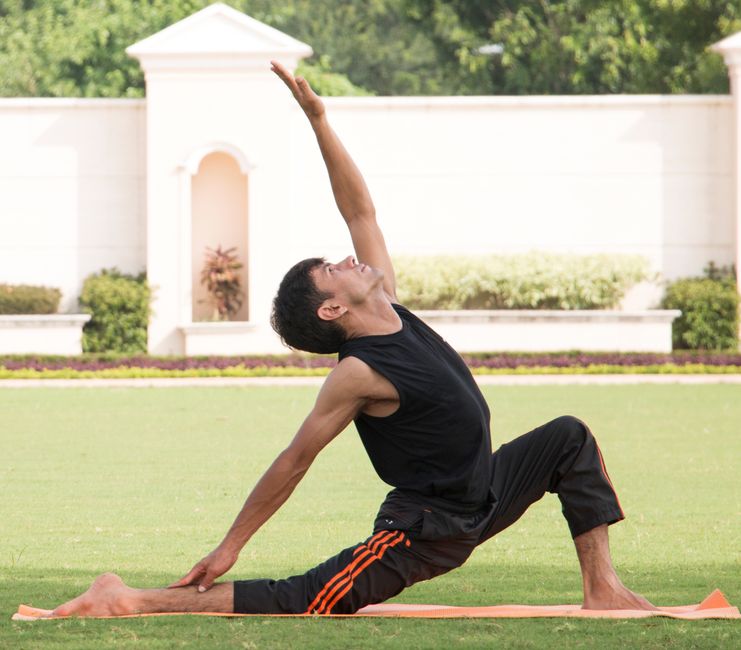
Adult male performing yoga crescent lunge pose outdoors on a sunny day.

How to practise it safely

  • Move more slowly than you would later in the day; the first round should feel like a stretch, not a workout.
  • Low blood pressure or morning dizziness: come up from forward folds slowly, head last.
  • Wrist pain: forearms instead of hands in tabletop, and fists or blocks in downward dog.
  • Back problems, pregnancy or recent surgery: ask a qualified teacher or health professional first.

This sequence has not yet been reviewed by a qualified teacher.

Easier alternatives

Stay standing with the gentle standing sun salutation, or sit with the chair yoga sequence. For the end of the day, see bedtime yoga.
Frequently asked questions

Is there a traditional morning yoga sequence?

No single one. Sun salutations are a common morning practice in several schools; this page is our own 15-minute educational sequence.

Should I do yoga before or after breakfast?

Many people prefer an empty stomach or a light snack; leave a couple of hours after a full meal.

Sources

  1. Yoga: Effectiveness and Safety, National Center for Complementary and Integrative Health (NIH) (accessed October 6, 2026)
  2. The Sun Salutation, Sivananda Yoga Vedanta Centres (accessed October 6, 2026)

Facts checked on October 6, 2026