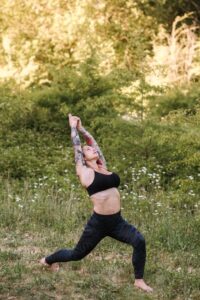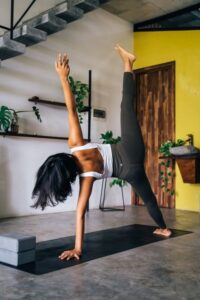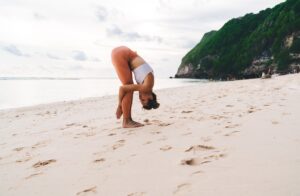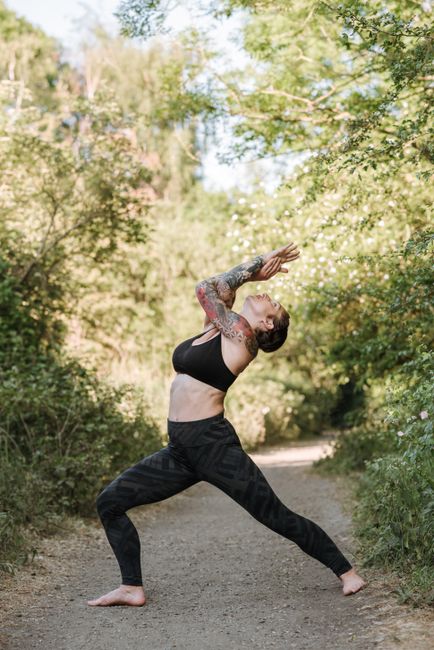
In short: high lunge is a standing lunge with the back heel lifted: the front knee bends over the ankle, the back leg is straight and active on the ball of the foot, and the torso lifts upright with the arms overhead. It strengthens the legs, stretches the front of the back hip and challenges balance. If it wobbles, lower the back knee into a low lunge or keep the hands on the hips.
High lunge is everywhere in flowing classes, and it is harder than it looks: Yoga Journal calls it demanding and somewhat advanced because the lifted back heel makes the base narrow. We class it as intermediate, with easier versions below.
The name: a modern pose
High lunge is a modern descriptive name. Yoga Journal states plainly that it has no direct Sanskrit translation, and it is not among the poses of Light on Yoga or the Ashtanga series. With the arms up and a slight lift of the chest it is often called crescent lunge or crescent pose; Yoga International teaches it under that name. Sanskrit labels you may hear in class, such as “Ashta Chandrasana” (which Yoga Journal mentions for the crescent version) or “Alanasana”, are modern usage and not established traditional names, so we do not use them as this pose’s Sanskrit name.
Making high lunge work
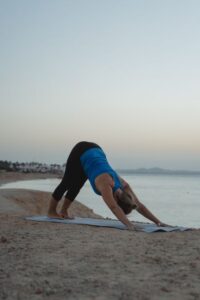
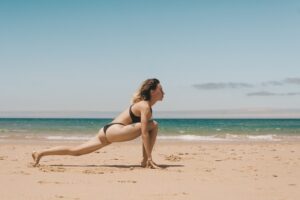
From downward-facing dog, step one foot forward between the hands with the knee over the heel, or from a standing forward fold, step one foot back onto the ball of the foot. Keep the back leg straight and strong, pressing back through the heel. Yoga Journal’s teaching tip is to watch the front knee: it should not bend past 90 degrees or move beyond the ankle, so the work stays in the thigh muscles rather than the knee.
For balance, Yoga Journal suggests squeezing the inner thighs toward each other, drawing in the lower belly and pressing through the front big toe. Inhale and lift the torso, stack the shoulders over the hips and reach the arms overhead, palms facing. Avoid over-arching the lower back or pushing the front ribs forward; reach back through the back heel to keep the body long. Yoga Journal holds the crescent version 30 seconds to a minute; in a flow it may be just a breath or two.
Finding the right stance length
The length of the stance decides most of how high lunge feels. Too short, and the front knee shoots forward past the ankle. Too long, and the hips sag and the lower back takes the strain. Yoga Journal’s strength sequence gives a simple test: take a big step back and adjust until the front leg makes roughly a 90-degree angle, with the knee stacked over the ankle and the center of the knee pointing toward the second toe. Keep the hips and shoulders facing the front of the mat.
The back leg does as much work as the front. Press the back heel toward the wall behind you and lift the inner thigh of the back leg toward the ceiling; this keeps the back knee straight without locking it and stops the pelvis from dropping. At the same time, lift the lower belly away from the front thigh so the chest stays upright and the lower back does not collapse.
Two variations from the same sequence build strength. In the first, push down through the front foot to straighten the front leg as you inhale, and bend it again as you exhale, moving with the breath 5 to 10 times before switching sides. In the second, hold a block between your hands at its widest setting as you reach up, squeezing it as if you were lifting it toward the ceiling. Both keep the arms and shoulders active and make the pose a good warm-up for warrior poses.
Precautions in plain words
Yoga Journal lists high blood pressure and heart problems among the cautions for the crescent version: keep the arms down, the effort moderate, and ask your doctor. Do not practise it with a serious knee injury; with milder knee discomfort, shorten the stance and bend less. If balance is uncertain, hold the back of a chair or use the knee-down version. With lower back pain, keep the hands on the hips and the lower belly engaged.
Preparation and what comes next
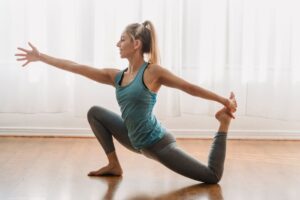
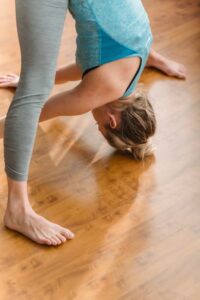
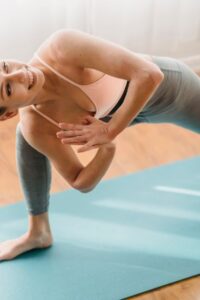
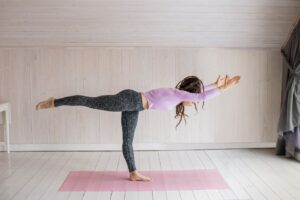
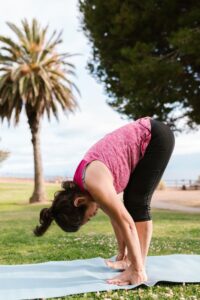
Prepare with low lunge, downward-facing dog and wide-legged forward fold. From high lunge you can twist into revolved lunge, lower the back heel into warrior I, or tip forward into warrior III. Standing forward fold is a natural counterpose.
Where it is taught
High lunge belongs to modern vinyasa, power and hatha classes, often inside sun salutation variations and warrior flows.