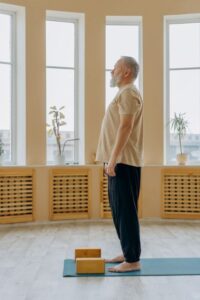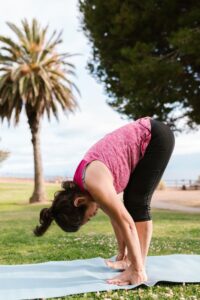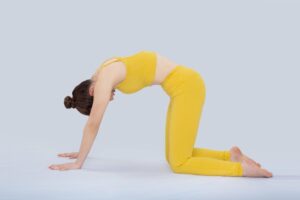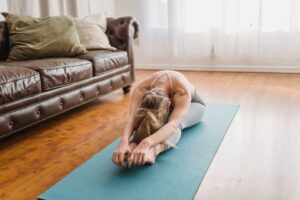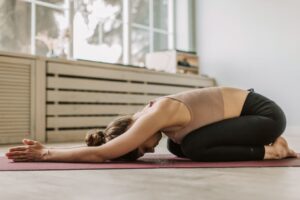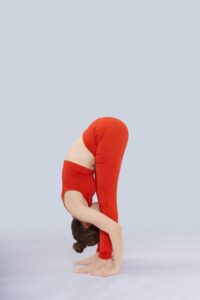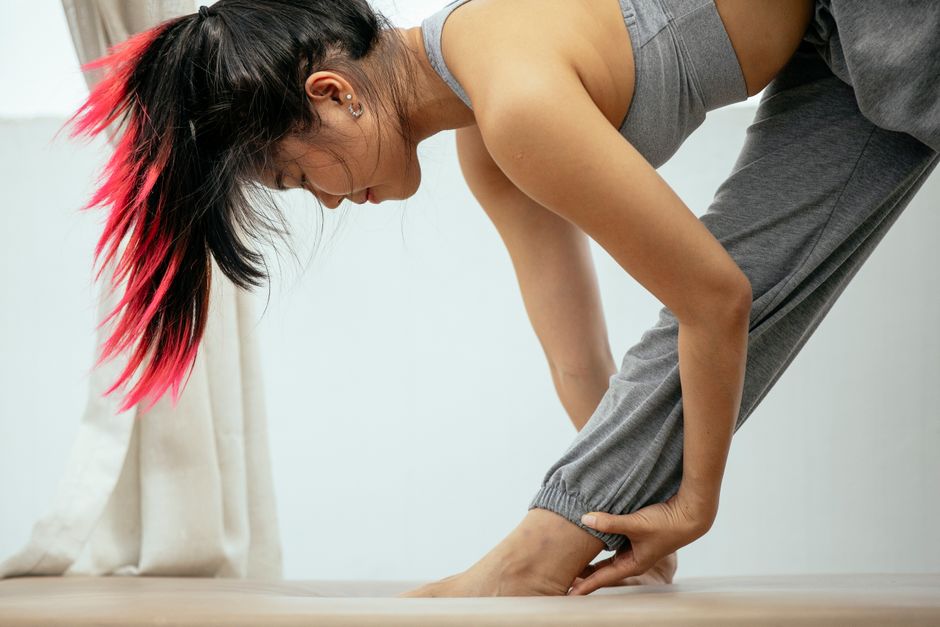
In short: pyramid pose is a forward fold over a straight front leg from a short, staggered stance, with both legs straight and the hips facing forward. It stretches the hamstrings and the back of the hips and asks for steady balance. Traditional versions join the palms behind the back; start with the hands on blocks, fold from the hips with a long spine, and keep the knees from locking.
Pyramid is a quieter pose than the warriors but very revealing: tight hamstrings show at once, and so does a stance that is too long or too narrow. Below we explain the name, how to set your feet, the cues for a good fold, the precautions and where the pose leads.
The name
The Sanskrit name is Pārśvottānāsana: pārśva means side or flank and uttāna an intense stretch, so the name in Light on Yoga is the pose in which the side of the chest is stretched intensely. In English it is usually called pyramid pose or intense side stretch pose. B.K.S. Iyengar teaches it with the palms joined behind the back in a “namaste” at the level of the shoulder blades, and the Ashtanga standing sequence uses the same reverse-prayer hands.
Making pyramid work
The stance is shorter than in the warriors. Yoga Journal suggests stepping the back foot 2 to 4 feet back, with the back foot turned in about 30 to 45 degrees; AshtangaYoga.info describes a step of about one arm’s length, heels roughly hip-width apart so the pelvis can turn toward the front. Yoga Journal’s beginner tip is that most people take too wide a stance: bring the feet closer and the fold becomes easier and steadier.
Square the hips as far as is comfortable by drawing the front-leg hip back. Inhale to lengthen the spine and firm the thighs; exhale and hinge from the hips, reaching the breastbone forward before letting the head come down toward the shin. Put the hands on blocks or the shin rather than rounding the back to reach the floor. Reverse prayer, or simply holding the elbows behind the back, is an extra shoulder stretch, not a requirement. Iyengar gives 20 seconds to half a minute; Ashtanga five breaths.
The arms, step by step
The arm position is the part people find hardest, so it helps to know the options. In Yoga Journal’s version you spread the arms out to the sides on an inhale, then on the exhale roll the arms inward, bend the elbows and bring the palms together behind the back. If the palms will not meet, Light on Yoga says to simply hold one wrist with the other hand behind the back and follow the same steps. If even that strains the shoulders, leave the hands beside the front foot, on blocks or on the shin. While you fold, draw the tops of the upper arms back and up, away from the floor, so the chest stays open.
Steadiness from the feet
Yoga Journal’s teachers describe pyramid as a balance between a free upper body and a stable base. Press down through all four corners of both feet. In the back foot, root the big toe and the inner heel, which helps the hips stay level instead of one side lifting. Keep a soft bend in the knees and let the muscles of the legs, hips and belly hold you up, so the ligaments behind the knees are not doing the work. If balance is shaky, stand with your back to a wall, step one foot forward and fold; the wall gives you a touch point behind you.
Iyengar’s full version includes a short backbend first: with the hands in reverse prayer, you turn toward the front leg and take the head back before folding. He also moves from side to side without standing up, swinging the trunk around the hips. Most classes keep it simpler: fold, hold, come up, change sides. To come up, inhale and use the strength of the legs rather than the lower back. Pyramid is in the very first weeks of the beginners’ course in Light on Yoga, so it is a good pose to learn early.
Precautions in plain words
Do not lock or push back the knees; keep a micro-bend if they hyperextend. With a hamstring injury, a lower back or disc problem, keep the hands on high blocks and fold only partway with a flat back. The head goes below the heart in the full fold: if you have blood-pressure problems, glaucoma or get dizzy, keep the head above the hips and come up slowly. With wrist or shoulder pain, skip the reverse prayer.
Preparation and what comes next
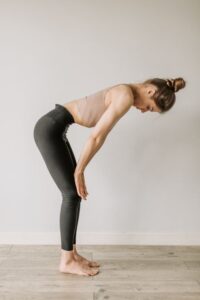
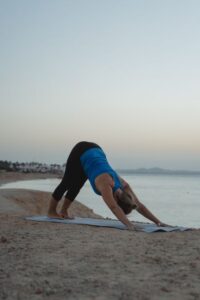
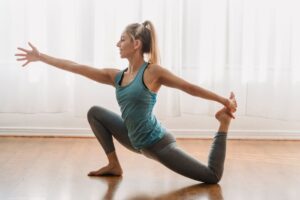
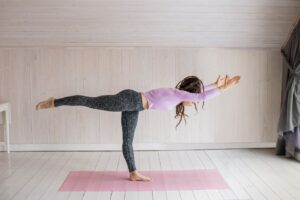
Prepare with half standing forward fold, downward-facing dog and low lunge. Pyramid has the same feet as revolved triangle, so it is the natural step before that twist, and it is a good preparation for warrior III and half split.
Where it is taught
Pyramid is in Iyengar yoga, the Ashtanga standing sequence and many hatha and vinyasa classes.