Fish Pose (Matsyasana): the two classic versions, steps and neck care

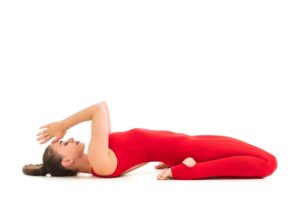
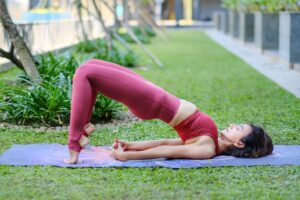
Fish pose (Matsyasana) arches the chest up from lying on the back, the head resting lightly on the floor. Taught with straight legs (Sivananda) or in lotus (Light on Yoga, Ashtanga).

Not yet reviewed by a qualified teacher Names and shape checked against 5 sources

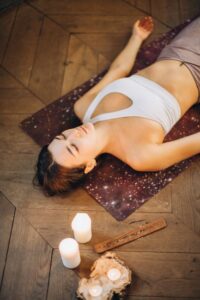
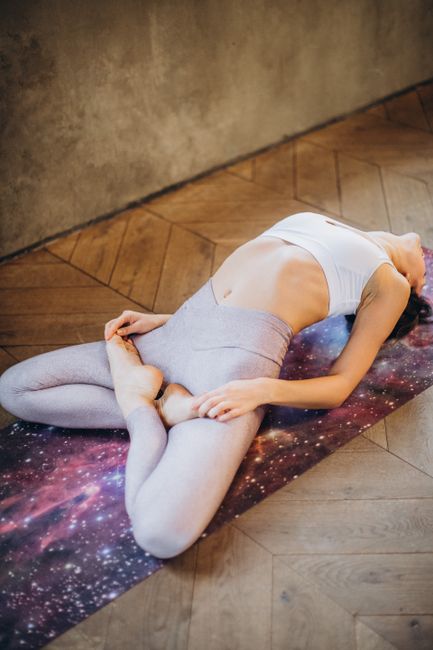
Woman performing Fish Pose yoga asana on a cosmic-themed mat indoors.
Sanskrit name
Matsyāsana मत्स्यासन (source)
Also called
Fish in Lotus
Other spellings
Matsyasana
Pose family
Backbend, Supine
Starting position
Reclining (on the back)
Movement
Backbend
Taught in
Hatha Yoga: The Historical Term and the Modern Class
Difficulty
Intermediate
Prerequisite skills
A comfortable neck. Lotus version: lotus without knee strain.
Body areas
Chest, Neck, Shoulders, Spine
Props
Blanket, Block, Mat, None
Practised
Solo

Names in different traditions

TraditionName usedNote
Sivananda Yoga Vedanta CentresMatsyasana (Fish)Legs straight, hands under the buttocks, elbows down, crown of the head on the floor, about 30 seconds; fish in lotus as an advanced variation.
Iyengar (Light on Yoga)MatsyāsanaAsana 51, Plate 113: in Padmasana, crown of the head down, forearms folded behind the head, 30 to 60 seconds each leg-cross; easier: lie flat, arms overhead (Plate 114).
Bihar School (Asana Pranayama Mudra Bandha)MatsyasanaIn padmasana holding the big toes, elbows down; 1 to 3 minutes; beginner variation with the legs straight.
Ashtanga vinyasa (finishing sequence)MatsyāsanaIn lotus, counterpose to shoulderstand and plough (AshtangaYoga.info).

Step by step

Coming into the pose

  1. Lie on the back with the legs straight and the feet together (or knees bent, feet flat).
  2. Lift the hips slightly and slide the hands, palms down, under the buttocks; tuck the elbows close to the sides.

In the pose

  1. Inhale, press the forearms and elbows down and lift the chest and upper back into an arch.
  2. Tip the head back and rest the crown (or back of the head) lightly on the floor, keeping most of the weight on the elbows.
  3. Keep the legs active and breathe deeply into the chest for 15 to 30 seconds.

Coming out

  1. Press the elbows down, lift the head slightly, lower the upper back, then the head. Hug the knees in and rest.

Breathing

Lift the chest on an inhalation and breathe slowly and deeply in the pose; the open chest makes fuller breathing easy. Come out on an exhalation (Light on Yoga comes up on an inhalation from lotus).

Alignment cues

  • Weight on the forearms and elbows, not the head.
  • Lift the chest first, then let the head go back.
  • Shoulder blades pressing into the back.
  • Legs active; throat soft.

Common alignment errors

  • Putting the body weight on the head and crunching the neck.
  • Dropping the head back before lifting the chest.
  • Coming out by lifting the head first under load.
  • Forcing the legs into lotus.

Modifications and easier variations

  • Lower the chest slightly, or rest the back of the head on a folded blanket. blanket
  • Light on Yoga's easier stage: lie flat with the arms stretched overhead. none
  • Sivananda variation: cross the legs (easy pose) instead of lotus. none

Advanced variations

Props and chair adaptations

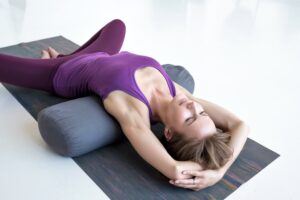
  • Supported fish: a rolled blanket or block under the shoulder blades and another under the head (see supported fish). block

Precautions

  • Neck discomfort or dizziness: skip it or hold only a few breaths (Sivananda); use supported fish.
  • Neck injury: head on a blanket, or avoid.
  • Heart disease, peptic ulcer, hernia, back conditions, serious illness, pregnancy: avoid (Bihar School).
  • Knees: never force lotus.

Learn it with a teacher: The straight-leg version suits self-practice. Learn the lotus version with a teacher.

General information, not medical advice. Poses do not cure illness. If you are pregnant, injured or have a health condition, check with your doctor and tell your teacher before you practise.

In short: fish pose is a backbend done lying on the back: you lift and arch the chest, take the head back and rest it lightly on the floor, so the chest and throat open. It is often practised after shoulderstand as its counterpose. There are two classic versions, one with the legs straight and one with the legs in lotus, and in both the head should carry very little weight.

Below we explain the name and the two versions taught by different schools, how to protect the neck, the precautions, the supported option and where fish pose is taught. The restful version over a bolster or blanket has its own page, supported fish.

The name and the two versions

The Sanskrit name is Matsyāsana, from matsya, fish. Light on Yoga dedicates the pose to Matsya, the fish incarnation of Vishnu; the Sivananda centres say the name comes from the idea that you would float easily in this position in water; the Bihar School compares the folded legs to a fish’s tail. The name is the same everywhere, but two shapes are taught:

  • Legs straight (Sivananda and most beginner classes). Lying on the back with the feet together, the hands go under the buttocks, the elbows press down, the chest arches up and the crown of the head rests on the floor. This is the fish of the Sivananda twelve basic asanas, held for about 30 seconds after shoulderstand and plough. Yoga Journal teaches it with the knees bent or the legs straight.
  • Legs in lotus (Light on Yoga, the Bihar School, Ashtanga). Sitting in lotus, you lie back, arch the chest, rest the crown of the head on the floor and hold the feet or toes, or, in Light on Yoga‘s final form, fold the forearms behind the head. Ashtanga’s finishing sequence uses this version after shoulderstand and plough. It needs a comfortable lotus and is not a beginner pose.

How to make fish work

The arch comes from the upper back and the elbows, not the neck. Press the forearms and elbows firmly down and lift the chest first; only then let the head tip back. Yoga Journal stresses keeping minimal weight on the head; the Bihar School tells you to lower into and rise from the pose using the elbows, with control. Depending on how high the chest lifts, the back or the crown of the head touches the floor. Keep the legs active (pressing out through the heels in the straight-leg version) and breathe deeply into the chest.

To come out, press the elbows down, lift the head slightly, lower the upper back and then the head. Holds vary: 15 to 30 seconds (Yoga Journal), about 30 seconds (Sivananda), 30 to 60 seconds per leg-cross in lotus (Light on Yoga), and one to three minutes in the Bihar School. If the full arch is too much, Light on Yoga suggests simply lying flat with the arms stretched overhead.

Precautions in plain words

The neck is the main concern. The Sivananda centres advise skipping the pose, or holding it only for a few breaths, if extending the neck causes discomfort or dizziness. With a neck injury, keep the head on a folded blanket or use supported fish. The Bihar School advises against it with heart disease, peptic ulcer, hernia, back conditions, serious illness and during pregnancy. The lotus version adds risk to the knees: never force the legs into lotus.

Preparation and what comes next

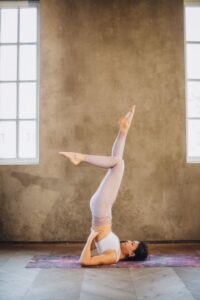
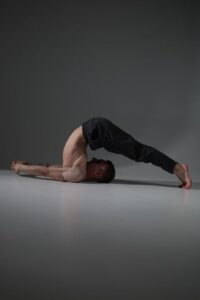
Fish is traditionally a counterpose to shoulderstand and plough, which flex the neck forward. Prepare with bridge, cobra and reclining hero. In the Sivananda order it is followed by seated forward bend; afterwards hug the knees in and rest in corpse pose.

Where it is taught

Fish is the fourth pose of the Sivananda twelve basic asanas, part of the Ashtanga finishing sequence (in lotus), in Light on Yoga (Iyengar) and the Bihar School system, and in many hatha classes. Supported fish appears in restorative yoga.
Preparatory poses

Follow-up poses and transitions

Counterposes

Variations

Related poses

More backbend poses

Frequently asked questions

Why is fish done after shoulderstand?

Shoulderstand and plough flex the neck forward; fish arches the neck and upper back the other way, so many schools use it as the counterpose.

Should my head carry weight in fish pose?

Very little. The elbows and forearms hold you up; the head only rests on the floor.

Do I need lotus for fish pose?

No. The Sivananda and most beginner versions keep the legs straight. The lotus version is a classical advanced form.

Sources

  1. Fish (Matsyasana): the 12 basic asanas, Sivananda Yoga Vedanta Centre London (accessed October 6, 2026)
  2. B.K.S. Iyengar, Light on Yoga: asana 51, Matsyasana, Plates 112-114, Internet Archive (Digital Library of India copy) (accessed October 6, 2026)
  3. Fish Pose: How to Practice Matsyasana, Yoga Journal (accessed October 6, 2026)
  4. Swami Satyananda Saraswati, Asana Pranayama Mudra Bandha: Matsyasana, Bihar School of Yoga (copy hosted by hathajoga.lt) (accessed October 6, 2026)
  5. Matsyāsana: Fisch (Fish), AshtangaYoga.info (Dr. Ronald Steiner) (accessed October 6, 2026)

Facts checked on October 6, 2026