This beginner sun salutation is a newly designed educational flow by YogaVacation, not a traditional sequence. It keeps the shape and rhythm of the classic sun salutations (stand, reach, fold, go to the floor, come back up), but swaps the most demanding moves for easier ones: you step instead of jumping, lower with the knees down, lift into a low cobra instead of upward-facing dog, and bend the knees as much as you like. Once it feels easy, the traditional versions are a short step away.
Why say “designed”? Because there is no single standard “beginner sun salutation”. Teachers simplify the sequence in many ways, and this is one of them. The traditional orders are on their own pages: Sun Salutation A and B from Ashtanga, and the 12-position sun salutation from the Sivananda and Bihar schools.
What it is built from
The flow borrows its structure from the 12-position version, which already avoids jumping: a lunge on the way back and on the way forward, and a knees-down lowering. From the Ashtanga versions it takes the idea of linking every movement to one breath. We changed three things for people new to yoga: the lunge is taken with the back knee down and the hands on blocks if needed, the lowering goes all the way to the floor, and the backbend is a low cobra with the elbows bent.
How the counting and sides work
There are 13 steps. Steps 4 and 10 are lunges: step the right foot back in the first round and forward again in step 10, then use the left foot in the next round. We count each pass as one round, so two rounds cover both sides. Three to six rounds take five to ten minutes. The breath follows a simple rule: inhale when you lift or open, exhale when you fold or lower. If a movement takes longer than a breath, take an extra breath; the pace should never leave you breathless.
The order, step by step
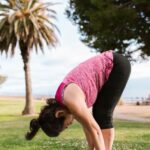
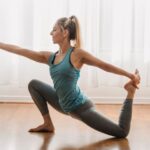
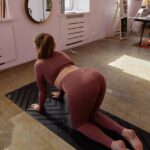
Read this once before you start, then follow the step list on the page. Stand with the feet hip-width apart and the palms together, and breathe out (1). Breathe in and reach the arms up (2). Breathe out and fold forward with the knees bent as much as you need (3). Breathe in and step the right foot back into a low lunge, back knee down, hands on the floor or on blocks (4). Breathe out and bring the left knee back beside the right so you are on hands and knees in tabletop (5).
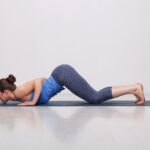
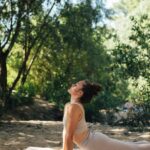
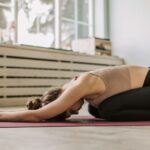
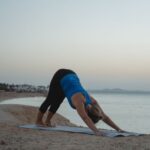
Breathe out as you lower the knees, chest and chin, or simply lie all the way down (6). Breathe in and lift the chest a little into low cobra, elbows bent and close to the ribs (7). Breathe out and push back into child’s pose (8). Come up onto the hands and knees, tuck the toes and lift the hips into downward dog with the knees bent, and stay for three easy breaths (9). Breathe in and step the right foot forward between the hands into a low lunge (10). Breathe out, bring the left foot forward and fold (11). Breathe in and rise with the arms up (12), then breathe out with the palms together (13). That is one round; the next round leads with the left foot.
Moving the back foot forward from the lunge or from downward dog is often the hardest moment. If the foot does not reach the hands, lower the back knee and help the foot forward with your hand, or step it forward in two or three small steps. Nobody is timing you.
How to practise it safely
- Knees: fold a blanket or the edge of the mat under the back knee in the lunges and when lowering.
- Hamstrings and back: bend the knees in every forward fold; it protects the lower back and still stretches the legs.
- Wrists: spread the fingers and press through the knuckles; put the hands on blocks to take some weight off.
- Head below the heart: the folds and downward dog lower the head. With high blood pressure, glaucoma or a tendency to dizziness, check with a health professional, rise slowly, or choose the gentle standing or chair version.
- Pregnancy: avoid lying on the belly and ask a prenatal teacher; see prenatal yoga.
Stop any movement that causes sharp pain. This page is general information, not individual advice; the instructions have not yet been reviewed by a qualified teacher.
When to practise it
Sun salutations are traditionally practised in the morning; the Sivananda centres note that the sequence is customarily done at dawn, facing the rising sun, and use it to warm up the whole body before the main postures. This flow works the same way: on its own as a short morning routine, or as the warm-up at the start of a longer session. The Sivananda centres suggest starting their version with four rounds and building up gradually to twelve, and a similar patient approach suits this flow too.
From here to the traditional versions
When the flow feels smooth, change one thing at a time: lift the back knee in the lunges, hold a plank before lowering, then try lowering halfway in chaturanga with the knees down. The common vinyasa transition page breaks that part into stages. After that, Sun Salutation A is mostly a matter of stepping back to plank instead of lunging.
Even easier options: the gentle standing sun salutation has no floor work at all, and the chair sun salutation is done seated. New to yoga in general? Start with yoga for beginners.