Half Moon Pose (Ardha Chandrasana): steps, props and the name collision

Half moon pose (Ardha Chandrasana) is a sideways standing balance on one leg. Steps, block and wall options, precautions, and why hot yoga and the Bihar School use the same name for different postures.

Not yet reviewed by a qualified teacher Names and shape checked against 4 sources

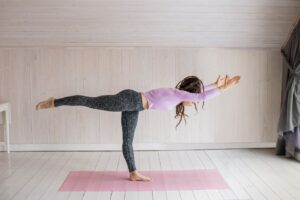
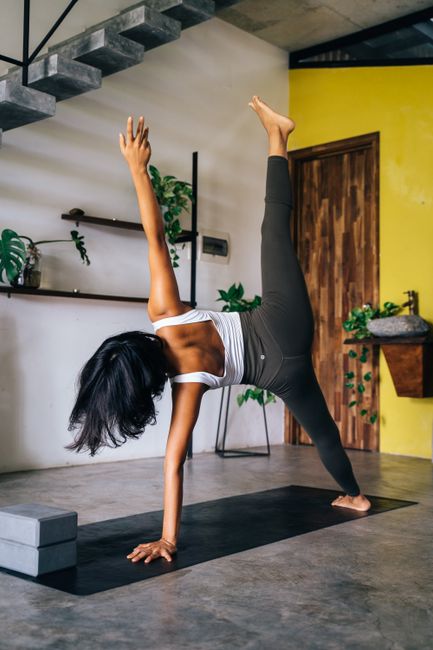
Asian woman performing a yoga pose indoors, showcasing balance and strength.
Sanskrit name
Ardha Candrāsana अर्धचन्द्रासन (source) (varies by tradition, see below)
Also called
Half Moon
Other spellings
Ardha Chandrasana, Ardha Candrasana
Pose family
Balancing, Side bend, Standing
Starting position
Standing
Movement
Balance
Taught in
Vinyasa Yoga: Flow, Breath and What to Expect, Hatha Yoga: The Historical Term and the Modern Class
Difficulty
Intermediate
Prerequisite skills
Comfortable triangle pose and tree pose; enough hamstring length to reach a block with a straight standing leg.
Body areas
Chest, Core, Hamstrings, Hips, Legs
Props
Block, Chair, Wall
Practised
Solo

Names in different traditions

TraditionName usedNote
Iyengar (Light on Yoga)Ardha ChandrāsanaAsana 10, plate 19: one-leg balance entered from Utthita Trikonasana; hold 20 to 30 seconds.
Hot Yoga 26+2Ardha Chandrasana (Half Moon Pose)A different posture: standing side bend on both feet, arms overhead, palms together (Bikram Yoga Works posture guide).
Bihar School of YogaArdha chandrasana (crescent moon pose)A different posture: kneeling lunge with the back and neck arched (Asana Pranayama Mudra Bandha).

Step by step

Coming into the pose

  1. Start in triangle pose with the right leg forward. Place the left hand on the left hip.
  2. Bend the right knee and place the right fingertips (or a block) about a foot in front of and slightly outside the right foot. Step the back foot in a little.
  3. Shift your weight forward over the right foot until the right shoulder is over the right wrist.

In the pose

  1. Straighten the right leg as you lift the left leg to hip height, toes pointing forward. Reach out through the left heel.
  2. Stack the left hip over the right, turn the chest open to the side and, if steady, extend the left arm toward the ceiling.
  3. Keep the gaze down or to the side. Stay for several breaths, the bottom hand light.

Coming out

  1. Bend the standing knee, lower the left leg back to the floor with control and return to triangle. Repeat on the other side.

Breathing

Breathe evenly; Light on Yoga asks for deep, even breathing for 20 to 30 seconds. Use an exhale to lift the leg and settle the weight into the standing foot.

Alignment cues

  • Weight over the standing foot; the bottom hand only steadies.
  • Standing kneecap points toward the toes.
  • Lifted leg at hip height, toes facing forward, heel reaching back.
  • Top hip stacks over the bottom hip; chest turns open.
  • Spine long from tailbone to crown; neck relaxed.

Common alignment errors

  • Lifting the leg before the weight has moved over the standing foot.
  • Leaning heavily on the bottom hand.
  • Locking the standing knee backward.
  • Collapsing the chest toward the floor because the hand is too far down; use a block.
  • Turning the head up before the balance is steady.

Modifications and easier variations

  • Keep the top hand on the hip and the gaze down. none

Advanced variations

Props and chair adaptations

  • Block under the bottom hand, at the height that lets the chest open. block
  • Back of the body against a wall, with the lifted heel and the back of the head resting on it. wall
  • Facing away from the wall, press the lifted foot flat into it at hip height. wall
  • Bottom hand on the seat of a chair instead of the floor. chair

Precautions

  • Neck problems: keep the gaze down.
  • Low blood pressure, dizziness or inner-ear conditions: use the wall and come up slowly.
  • Pregnancy: only if already familiar, against a wall, and with your midwife or doctor in agreement.
  • Hamstring, hip or lower back injury: check with your doctor or physical therapist first.

Learn it with a teacher: Half moon is a demanding balance. A teacher can check that the standing knee tracks well and that the bottom hand is not carrying the weight; ask for help if the standing hip or knee aches.

General information, not medical advice. Poses do not cure illness. If you are pregnant, injured or have a health condition, check with your doctor and tell your teacher before you practise.

In short: in most schools, half moon pose is a sideways standing balance: one hand on the floor or a block, the other leg lifted level with the hip, and the chest turned open to the side. A block under the hand and a wall behind you make it far easier to learn. Be aware that the same name is used for different postures in hot yoga and in the Bihar School.

Half moon combines a one-leg balance, a strong standing leg and an open chest. It usually grows out of triangle pose, and it rewards patience: the shape comes together when the weight shifts properly over the standing foot, not when you throw the leg up. Below we cover the name and its collisions, the cues behind the steps, the precautions and where the pose fits.

One name, three different postures

Ardha means half and candra (often spelled chandra) means moon. In B.K.S. Iyengar’s Light on Yoga (1966), Ardha Chandrāsana is entered from triangle: the bottom hand goes to the floor about a foot in front of the foot, the back leg lifts, the top hand rests on the hip and the chest turns upward. Yoga Journal and most vinyasa and Ashtanga-influenced classes teach this same balance, and this page describes it.

Two other schools use the name differently. In the Hot Yoga 26+2 series, “Half Moon” (Ardha Chandrasana) is a standing side bend on both feet, with the arms overhead and the palms together, followed by a backbend and a forward bend; we cover that shape under standing side bend. In the Bihar School’s Asana Pranayama Mudra Bandha, Ardha Chandrasana is a kneeling lunge with the back arched, closer to low lunge. If a teacher says “half moon”, the style of class tells you which one is meant.

Making half moon work

Yoga Journal’s step-by-step guide puts the weight shift first: bend the front knee, place the hand ahead of and slightly outside the front foot, and move the torso forward until the shoulder is over the wrist before lifting the back leg. Then straighten the standing leg as the back leg rises to hip height. Keep the standing kneecap pointing toward the toes; when the knee rolls inward the balance goes with it.

The bottom hand is a guide, not a pillar. Light on Yoga makes the point that the standing foot and hip carry the weight while the hand only steadies the balance. A block under the hand brings the floor closer, so the chest can turn open instead of collapsing toward the mat. Reach out through the heel of the lifted leg as though pressing it into a wall, and lengthen the spine from tailbone to crown. Look down at first; turn the head to the side or up only when the balance is steady and the neck is comfortable.
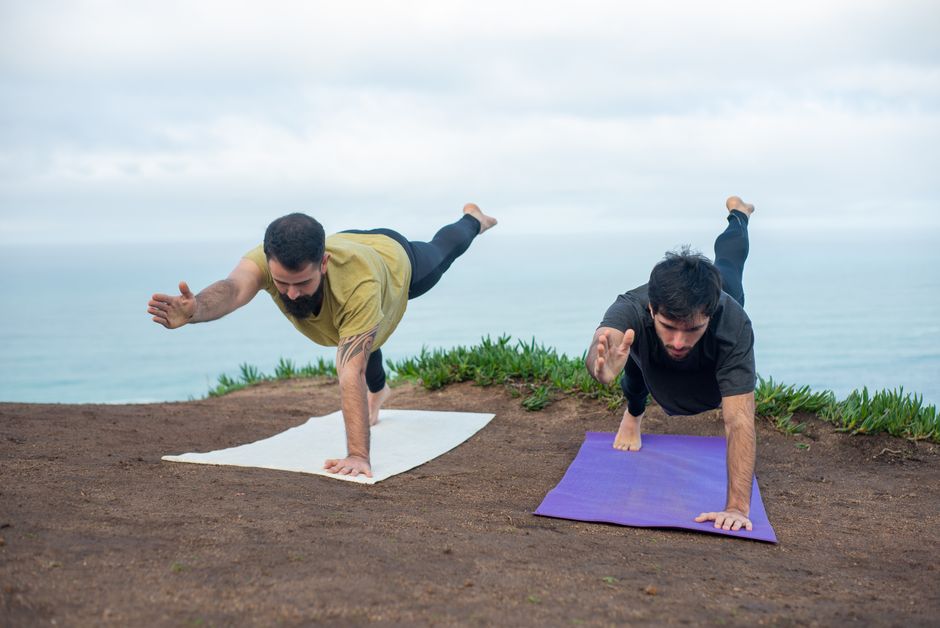
Two men practicing yoga poses on mats by the ocean, promoting fitness and well-being.

Precautions in plain words

Half moon is a demanding balance, so learn it with a wall behind you. Keep a microbend in the standing knee if it tends to lock back. With neck problems, keep the gaze down. With low blood pressure, dizziness or an inner-ear condition, use the wall and come up slowly. In pregnancy, practise against the wall and only if half moon was already familiar; check with your midwife or doctor. People recovering from a hamstring, hip or lower back injury should ask their doctor or physical therapist first. This page is general information, not individual advice.

Preparation and next poses

Warm up with triangle, extended side angle and tree pose. From half moon, more advanced options are revolved half moon, which turns the chest the other way, and sugarcane pose, which catches the back foot. To come down, return to triangle or step back to a wide stance and rest in a standing forward bend.

Where it is taught

The one-leg half moon is a standard standing pose in Iyengar, vinyasa and hatha classes. Browse other standing balances in the pose library.
Preparatory poses

Follow-up poses and transitions

Counterposes

Related poses

More balancing poses

Frequently asked questions

Why is the hot yoga half moon different?

The Hot Yoga 26+2 series uses the name Ardha Chandrasana for a standing side bend on both feet with the arms overhead. Iyengar and most vinyasa classes use it for the one-leg balance on this page. Same name, different postures.

Do I need a block for half moon pose?

Most people do at first. A block under the bottom hand lets the chest turn open instead of collapsing toward the floor.

Where should I look in half moon pose?

Down at the floor while you find the balance. Turn the head to the side or up only when you are steady and your neck is comfortable.

How long should I hold half moon?

Light on Yoga suggests 20 to 30 seconds per side with even breathing. A few steady breaths is a good start.

Sources

  1. Half Moon Pose (Ardha Chandrasana): step-by-step with props, Yoga Journal (accessed October 6, 2026)
  2. B.K.S. Iyengar, Light on Yoga (1966), asana 10 Ardha Chandrasana, plates 18 and 19, Allen & Unwin (Internet Archive record) (accessed October 6, 2026)
  3. Ardha Chandrasana | Half Moon Pose (26+2 posture guide), Bikram Yoga Works (accessed October 6, 2026)
  4. Swami Satyananda Saraswati, Asana Pranayama Mudra Bandha: Ardha chandrasana (crescent moon pose), Bihar School of Yoga (Internet Archive) (accessed October 6, 2026)

Facts checked on October 6, 2026