Hands Under Feet Pose (Padahastasana): the deep standing fold, and the name confusion

Hands under feet pose (Padahastasana in Light on Yoga and Ashtanga) slides the palms under the soles in a deep standing fold. Other schools use the same name for a plain forward bend.

Not yet reviewed by a qualified teacher Names and shape checked against 4 sources

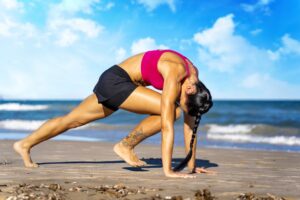
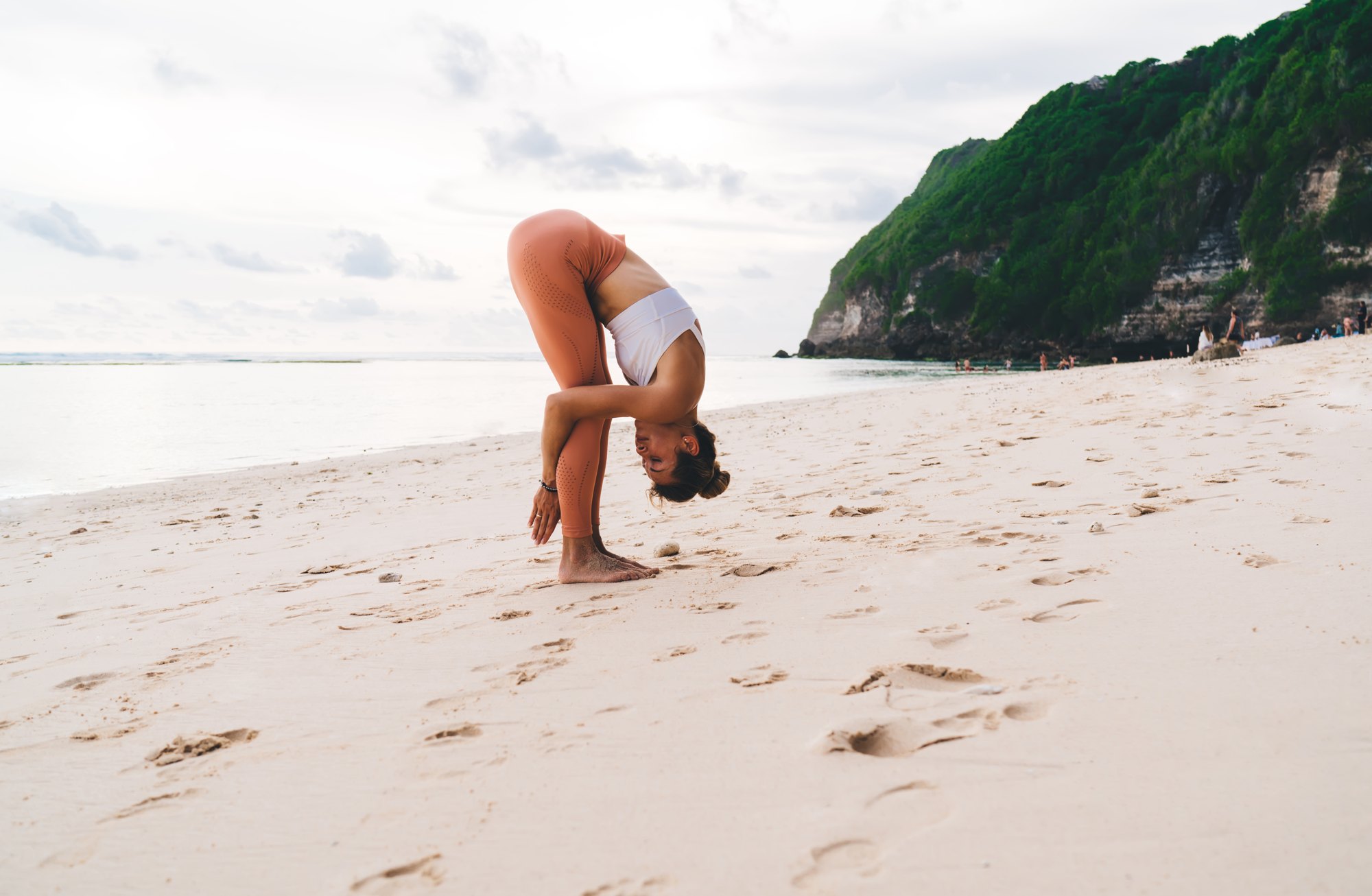
Hands under feet pose on a beach below green cliffs
Sanskrit name
Pādahastāsana पादहस्तासन (source) (varies by tradition, see below)
Also called
Hand to Foot Pose, Hands-to-Feet Posture, Gorilla Pose
Other spellings
Padahastasana, Pada Hastasana
Pose family
Forward bend, Standing
Starting position
Standing
Movement
Forward fold
Taught in
Vinyasa Yoga: Flow, Breath and What to Expect
Difficulty
Intermediate
Prerequisite skills
A comfortable standing forward fold and wrists that tolerate bending back under load.
Body areas
Arms and wrists, Hamstrings, Legs, Spine
Props
Chair, Strap
Practised
Solo

Names in different traditions

TraditionName usedNote
Iyengar (Light on Yoga)PādahastāsanaAsana 19, Plates 45–46: feet a foot apart, palms under the soles, concave back then head toward the knees; about 20 seconds. Rated Six*.
Ashtanga vinyasaPādahastāsanaSecond pose of the standing sequence after Padangusthasana; five breaths.
Yoga JournalPadahastasana (Hands-to-Feet Posture; Gorilla Pose)Hands under the feet (or heels), fold with the hips over the heels.
Bihar School / Sivananda / Common Yoga ProtocolPadahastasana / Pada Hastasana = standing forward bendA DIFFERENT shape: hands on the floor beside or in front of the feet. See Standing Forward Fold.

Step by step

Coming into the pose

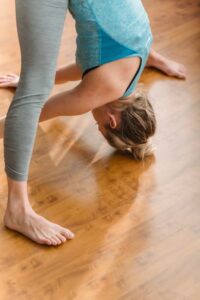
  1. Stand with the feet about hip-width (a foot) apart. Exhale and fold forward, bending the knees as much as needed.
  2. Slide the hands under the feet, palms up, so the toes reach toward the wrist creases.

In the pose

  1. Inhale, lift the head and chest and make the back long and slightly concave. Take a breath or two.
  2. Exhale, bend the elbows out to the sides and fold the trunk down along the legs, head toward the knees only as far as the spine stays long. Keep the hips over the heels.
  3. Hold about 20 seconds (Light on Yoga) or five breaths (Ashtanga), breathing normally.

Coming out

  1. Inhale and lift the head to the concave-back position, release the hands, bend the knees and come up slowly to standing.

Breathing

Inhale into the concave-back stage, exhale to fold. Breathe normally in the final position; inhale to lift out.

Alignment cues

  • Toes toward the wrist creases; weight over the balls of the feet.
  • Hips stacked over the heels.
  • Elbows bend out to the sides.
  • Lengthen the spine rather than pulling the head down.

Common alignment errors

  • Yanking the trunk down with the arms and rounding the back.
  • Locking the knees.
  • Leaning back into the heels.
  • Forcing the wrists when they are not ready.

Modifications and easier variations

  • Bend the knees deeply so the belly rests on the thighs. none
  • Hold the big toes instead (big toe pose) to spare the wrists. none

Props and chair adaptations

  • Loop a strap under the balls of the feet and hold it instead of standing on the hands. strap
  • With wrist or back limits, practise a supported half fold with the hands on a chair seat instead. chair

Precautions

  • Wrist pain or carpal tunnel problems: skip it; use big toe pose or a strap.
  • Displaced disc: do not bring the head toward the knees; learn the concave-back stage with a teacher (Light on Yoga).
  • Glaucoma, detached retina, uncontrolled blood pressure or dizziness: avoid head-down folds; come up slowly.
  • Hamstring tear or sciatica: use a bent-knee forward fold.

Learn it with a teacher: Light on Yoga advises learning it under guidance after mastering easier forward bends, especially with back problems.

General information, not medical advice. Poses do not cure illness. If you are pregnant, injured or have a health condition, check with your doctor and tell your teacher before you practise.

In short: hands under feet pose is a deep standing forward bend in which you slide the palms under the soles of the feet, toes toward the wrists, and use that grip to draw the trunk down along the legs. It is a stronger stretch for the backs of the legs and the wrists than the ordinary forward fold. Bend the knees generously while you learn it, and keep the spine long rather than pulling yourself down.

The pose is easy to describe and easy to confuse with others of a similar name. Below we sort out the naming first, then cover the cues, precautions and where the pose is taught.

The name: one word, two poses

The Sanskrit name is Pādahastāsana: pāda is the foot and hasta the hand. Light on Yoga describes it as bending forward and standing on one’s hands: the palms go under the soles. B.K.S. Iyengar rates it Six*, harder than the big toe fold that precedes it, and the Ashtanga standing sequence also opens with Padangusthasana followed by Padahastasana. Yoga Journal describes the same shape, sometimes called gorilla pose in modern classes.

The Bihar School of Yoga, the Sivananda centres and India’s Common Yoga Protocol use Padahastasana or Pada Hastasana for a plain standing forward bend instead, with the hands on the floor beside or in front of the feet, for example as position 3 of the 12-position sun salutation. That shape is our standing forward fold. If a class says “Padahastasana”, check which one is meant.

Making the pose work

Stand with the feet about hip-width apart (Iyengar says a foot apart), fold forward with bent knees, and slide the hands under the feet, palms up, so the toes reach toward the wrist creases. With the hands in place, inhale and lift the head and chest to make the back long and slightly concave, as Iyengar describes for the first stage. Then exhale, bend the elbows out to the sides and fold the trunk down along the legs, drawing the head toward the knees only as far as the spine stays long.

Keep the weight forward over the balls of the feet and the hips over the heels. The grip is not for yanking yourself down: use it to lengthen, and let the hamstrings release with the breath. Iyengar holds about 20 seconds; Ashtanga five breaths.

How to get the hands under the feet

Getting the hands into place is the first hurdle. Fold forward with the knees bent as much as you need, lift one foot, slide the hand under it palm up, and put the foot back down; then do the other side. The toes reach toward the wrist creases. Iyengar’s text keeps the knees straight here, but bent knees are the kinder choice while the hamstrings are tight, and you can straighten them gradually once the hands are set.

The pose then has two clear stages, and it is worth staying in the first for a while before moving on. In Light on Yoga, stage one is the head up and the back as concave as possible, legs firm, for a few breaths. Stage two is the fold: on an exhale, bend the elbows out to the sides and draw the head down between the knees by pulling the feet up against the palms. To come out, Iyengar reverses the order: inhale, lift the head back to the concave stage and take two breaths there, then inhale and stand up.

Common mistakes

  • Pulling with the arms so the back rounds: use the grip to lengthen first, then fold.
  • Weight sinking back into the heels: keep the hips over the heels and lean slightly toward the balls of the feet.
  • Rushing past the concave-back stage: it is where the length of the spine is built, and Iyengar’s text treats it as the safer stage for the back.
  • Coming up fast: lift the head first, pause, then rise, so you do not feel lightheaded.

In Iyengar’s beginners’ course, this pose arrives only in weeks 11 and 12, after many weeks of the easier standing poses, which is a good hint about its difficulty. If your wrists object, the big toe version just before it gives most of the same stretch.

Precautions in plain words

Standing on the hands bends the wrists back under load: skip it with wrist pain or carpal tunnel problems, and use big toe pose or a strap instead. Light on Yoga warns that with a displaced disc you should not bring the head toward the knees, and advises learning the concave-back stage with a teacher. The usual head-down cautions apply: avoid it with glaucoma or detached retina, uncontrolled blood pressure or dizziness, and come up slowly. With a hamstring tear or sciatica, choose a bent-knee forward fold.

Preparation and what comes next

Prepare with standing forward fold, half standing forward fold and big toe pose, which comes just before it in the Ashtanga sequence. Afterwards, rise slowly to mountain pose. The standing sequence continues with triangle.

Where it is taught

In this hands-under-feet form it belongs to Iyengar yoga and the Ashtanga standing sequence, and it appears in some vinyasa classes as gorilla pose.
Preparatory poses

Follow-up poses and transitions

Counterposes

Related poses

More forward bend poses

Frequently asked questions

Is Padahastasana the same as a standing forward bend?

It depends on the school. In Light on Yoga and Ashtanga, Padahastasana means the palms are under the feet. The Bihar School, Sivananda and the Common Yoga Protocol use the name for a standing forward bend with the hands beside the feet.

Why is it called gorilla pose?

It is a modern nickname used in some classes, including on Yoga Journal, for the hands-under-feet fold.

My wrists hurt in this pose. What can I do?

Hold the big toes or a strap instead, and keep the knees bent. Skip it if you have a wrist injury.

Sources

  1. B.K.S. Iyengar, Light on Yoga: asana 19, Padahastasana, Plates 45–46, Internet Archive (Digital Library of India copy) (accessed October 6, 2026)
  2. New Takes on Old Poses: Hands-to-Feet Posture Variation (Padahastasana), Yoga Journal (accessed October 6, 2026)
  3. Swami Satyananda Saraswati, Asana Pranayama Mudra Bandha: Surya Namaskara position 3, Padahastasana (hands beside the feet), Bihar School of Yoga (Internet Archive copy) (accessed October 6, 2026)
  4. Standing Forward Bend (Pada Hastasana), Sivananda Yoga Vedanta Centre London (accessed October 6, 2026)

Facts checked on October 6, 2026