Standing Side Bend: a simple side stretch for the ribs and waist

The standing side bend is a modern, gentle stretch: feet hip-width apart, arm or arms overhead, leaning to one side to lengthen the waist and ribs. A common warm-up in many classes.

Not yet reviewed by a qualified teacher Names and shape checked against 3 sources

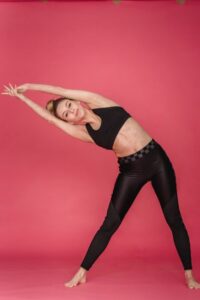
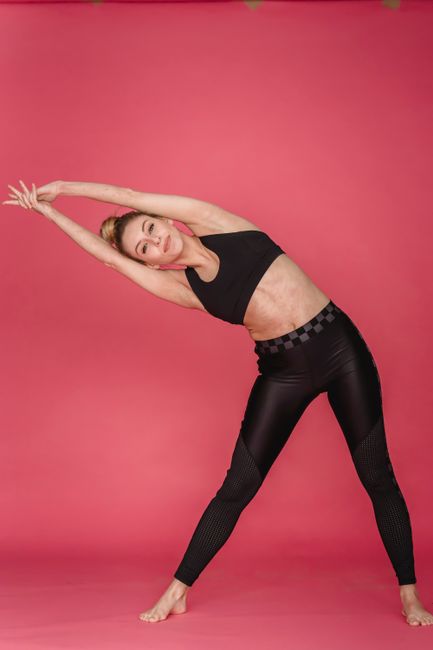
Full body of flexible female in sportswear stretching body with hands raised while training in studio against pink background
Sanskrit name
No established Sanskrit name: a modern descriptive name
Also called
Standing Crescent, Side Stretch, Standing side stretch, Mellow standing side bend
Record
Modern descriptive name (no established Sanskrit)
Pose family
Side bend, Standing
Starting position
Standing
Movement
Lateral bend
Taught in
Hatha Yoga: The Historical Term and the Modern Class, Vinyasa Yoga: Flow, Breath and What to Expect, Chair Yoga: Seated and Chair-Supported Practice
Difficulty
Beginner
Prerequisite skills
Standing comfortably and raising at least one arm overhead.
Body areas
Core, Shoulders, Spine
Props
Chair, None, Wall
Practised
Solo

Names in different traditions

TraditionName usedNote
Yoga JournalMellow Standing Side BendFeet hip-width, arms overhead, one wrist held, arms drawn to the side; 8 breaths each side.
Yoga InternationalStanding Side BendFrom mountain pose, one hand on the hip, the other arm up and overhead, hips moving the other way; five breaths.

Step by step

Coming into the pose

  1. Stand with the feet hip-width apart, weight even, pelvis level.
  2. Inhale and raise both arms overhead, palms facing; or place the right hand on the right hip and raise the left arm.

In the pose

  1. Lengthen up through the fingertips, then exhale and arc the upper body to the right. Let the hips move slightly to the left.
  2. Keep both hips and shoulders facing forward. If both arms are up, you can hold the left wrist with the right hand and draw gently.
  3. Breathe into the long side of the ribs for 5 to 8 breaths. Gaze forward or slightly down.

Coming out

  1. Inhale and come back to centre, lower the arms, and repeat on the other side.

Breathing

Inhale to lengthen, exhale to bend. In the pose, breathe slowly into the stretched side of the ribcage; come up on an inhalation.

Alignment cues

  • Lengthen up before bending sideways.
  • Hips move slightly opposite to the arms for balance.
  • Shoulders and hips stay facing forward; no twist, no forward lean.
  • Both feet press down evenly.

Common alignment errors

  • Collapsing into the short side instead of lengthening the long side.
  • Turning the chest toward the floor or ceiling, so the side bend becomes a twist.
  • Leaning forward or arching back.
  • Lifting the shoulders toward the ears.

Modifications and easier variations

  • One hand on the hip and only the other arm raised. none

Advanced variations

Props and chair adaptations

  • Stand with your back near a wall to keep the bend purely to the side. wall
  • Seated side bend: sit tall on a chair, one hand on the seat, the other arm reaching up and over. chair

Precautions

  • Lower back or disc problems: keep the bend small and stop at any pinching.
  • Shoulder injury: keep the hand on the hip or head instead of overhead.
  • Neck strain: look forward or down rather than up.

Learn it with a teacher: You can learn it on your own. With scoliosis, a teacher or physiotherapist can advise which side to emphasise.

General information, not medical advice. Poses do not cure illness. If you are pregnant, injured or have a health condition, check with your doctor and tell your teacher before you practise.

The yin yoga version

Yin yoga version: Banana (Bananasana, Yin Yoga): a lying side bend

The shapes look alike, but yin yoga holds them for several minutes with the muscles soft and props for support, while the active version is held with muscular engagement for a few breaths. The instructions and the intention differ, so follow the page for the version you are practising.

In short: a standing side bend is exactly what it sounds like: you stand with the feet hip-width apart, reach one or both arms overhead and lean to one side, stretching the side of the waist and the muscles between the ribs. It is a gentle, accessible stretch that many classes use as a warm-up. Lengthen up first, bend only to the side (not forward or back), and breathe into the stretched side.

Side bending is a movement we rarely make in daily life, which is one reason a simple side stretch can feel so welcome. This page covers the plain standing version. Two related poses have their own pages: swaying palm tree, the Bihar School practice with interlocked fingers and repeated swaying, and reverse warrior, a side bend over a lunge.

The name

“Standing side bend” is a modern descriptive name, and that is how both Yoga Journal and Yoga International present it: as a plain-English description, not a traditional asana. We do not give it a Sanskrit name. You may hear it called “standing crescent” or simply “side stretch”. Some teachers use Sanskrit labels for it, but they are not consistent, and one of them, Ardha Chandrāsana (half moon), is the name of a quite different one-legged balance in the Iyengar and Ashtanga traditions, so we do not use it here. See half moon pose for that one.

Making the side bend work

The stretch works best when you grow tall before you lean. Stand in mountain pose with the feet hip-width apart and the pelvis level. Reach the arms overhead, or, as Yoga International describes it, put one hand on the hip and reach the other arm up and over. Yoga Journal’s version holds one wrist with the other hand and draws the arms gently toward one side.

As the upper body arcs to the side, let the hips move slightly the other way: that keeps you balanced and spreads the curve along the whole side of the trunk. Keep both shoulders and both hips facing forward, as if you were between two panes of glass, so the bend does not turn into a twist or a forward lean. Breathe into the ribs on the long side and feel them widen. Hold for several breaths (Yoga Journal suggests eight), come back up through centre on an inhalation, and repeat on the other side.

A few details from Yoga Journal’s version make a real difference. Before you reach up, lift the lower belly a little and let the tailbone release toward the floor, so the pelvis stays neutral instead of tipping forward and arching the lower back. When you hold one wrist and draw the arms over, keep the shoulder of the stretched side drawing down, away from the ear. Let the gaze rest slightly down; that keeps the neck long.

Common mistakes and easy fixes

  • Leaning forward or back. If the chest drops forward or the ribs push out in front, come up a little and check that both shoulders and both hips still face straight ahead. Practicing with your back lightly against a wall shows you at once when you drift.
  • Collapsing the short side. The aim is length on the long side, not a deep crease on the other. Think of reaching up and over, as if drawing an arc.
  • Hunching the shoulders. If the arms overhead feel heavy, keep one hand on the hip, as in the Yoga International version, and reach only the top arm.
  • Holding the breath. Let the breath keep moving. Many people find it easier to bend as they breathe out and return as they breathe in.
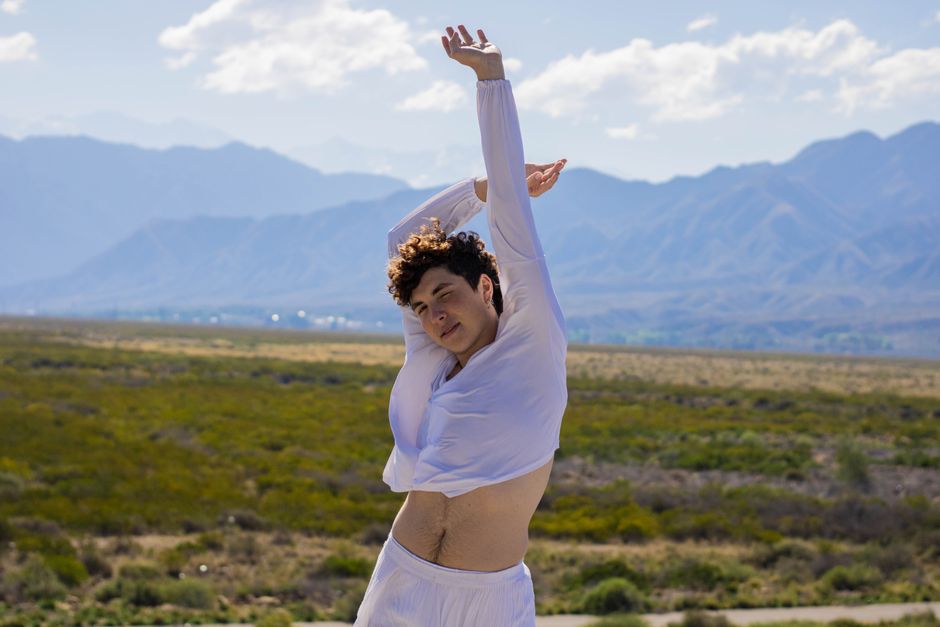
A young man in white clothes stretching outdoors with mountains in the background, showcasing a serene and natural setting.

Precautions in plain words

Keep the bend small if you have a lower back or disc problem, and stop if you feel pinching on the short side. With a shoulder injury, keep the top hand on the hip or the head instead of reaching overhead. If looking up strains the neck, look forward or slightly down. In pregnancy a gentle side bend with the feet wide is usually comfortable; avoid crunching the short side.

Preparation and what comes next

No special preparation is needed beyond upward salute to wake up the shoulders. A standing side bend prepares the side body for triangle, extended side angle, reverse warrior and gate pose, and it makes a gentle counter-movement after twists and forward bends.

Where it is taught

You will find it as a warm-up in hatha, vinyasa and gentle classes, in many morning routines, and seated on a chair in chair yoga. It is also used in yoga sequences for people with scoliosis, where teachers adapt which side is held longer.

Preparatory poses

Follow-up poses and transitions

Counterposes

Related poses

More side bend poses

Frequently asked questions

Does the standing side bend have a Sanskrit name?

Not an established one. It is a modern descriptive name. We avoid Ardha Chandrasana because Light on Yoga and Ashtanga use that name for half moon, a one-legged balance.

What does a standing side bend stretch?

The side of the waist and the muscles between the ribs on the long side, and the outer hip a little. It is a gentle stretch suitable as a warm-up.

How is it different from swaying palm tree?

Swaying palm tree (Tiryaka Tadasana) is a Bihar School practice with the fingers interlocked overhead, swaying to each side several times. The standing side bend is a general held stretch with many arm options.

Sources

  1. 4 Side Bends You Didn’t Know You Needed (Mellow Standing Side Bend), Yoga Journal (accessed October 6, 2026)
  2. A Yoga Sequence for Scoliosis (4. Standing Side Bend), Yoga International (accessed October 6, 2026)
  3. B.K.S. Iyengar, Light on Yoga: Ardha Chandrasana, Plate 19 (a standing balance, not this pose), Internet Archive (Digital Library of India copy) (accessed October 6, 2026)

Facts checked on October 6, 2026