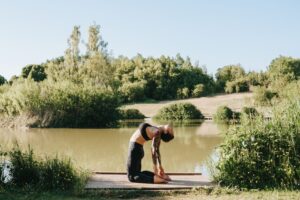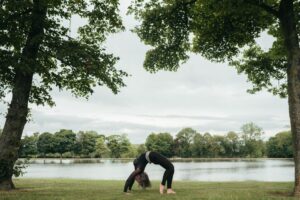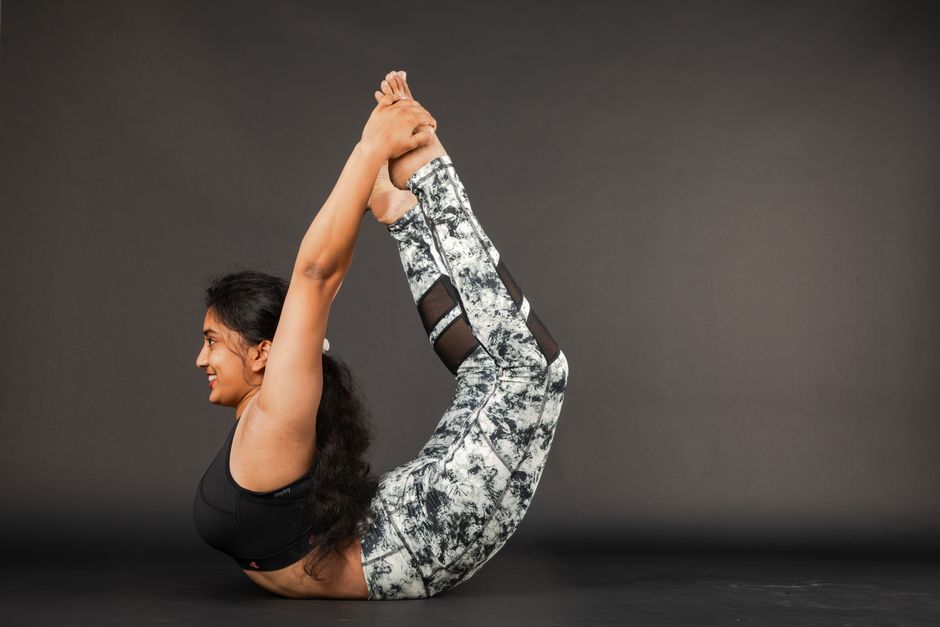
In short: bow pose is a belly-down backbend in which you hold your ankles and lift the chest and thighs, so the body curves like a bow and the arms act as the bowstring. Only the belly stays on the floor. It is a fuller backbend than cobra or locust, opening the front of the hips, the chest and the shoulders while working the back. Lift with the legs pressing back into the hands rather than by pulling with the arms.
Bow comes third in the Sivananda backbend trio of cobra, locust and bow, and appears in the Ashtanga intermediate series and most hatha classes. Below we explain the name (including an older posture with the same name), the cues, the precautions, the side bow variation and where it is taught.
The name, and an older bow posture
The Sanskrit name is Dhanurāsana, from dhanu (or dhanus), bow. Iyengar explains that the hands work like a bowstring to pull the head, trunk and legs up. Light on Yoga, the Sivananda centres, the Bihar School, Ashtanga and Yoga Journal all use the name for the belly-down pose on this page.
The medieval Hatha Yoga Pradipika uses the same name for a different, seated posture: holding the big toes and drawing one foot toward the ear, like drawing a bow. That shape is closer to what Light on Yoga calls Ākarṇa Dhanurāsana (the “bow drawn to the ear”). If you read about Dhanurasana in an old text, check which shape it means.
How to make bow work
Lie on the belly, bend the knees and hold the outside of the ankles. Sivananda insists on the ankles rather than the toes or the tops of the feet. Then kick the feet back into the hands: as the legs press back, the chest and thighs rise together. The Bihar School describes the legs doing the work while the back and arms stay relatively passive, and Yoga Journal’s cue is to press the shins back as the breastbone reaches forward and up. Keep the arms straight.
Keep the knees about hip-width at first; Iyengar notes that joining the knees too early stops the legs from lifting, and suggests bringing them together only after the full lift. Roll the shoulders back so the chest opens, and let the head follow the curve rather than throwing it back. Breathing is fast because the belly is pressed; keep it smooth. Holds: about 20 seconds to a minute in Light on Yoga, 10 to 30 seconds three times in the Sivananda method, five breaths in Ashtanga.
Precautions in plain words
Bow is a strong backbend with pressure on the abdomen. The Bihar School advises against it with a weak heart, high blood pressure, hernia, colitis or peptic or duodenal ulcers, and to wait three or four hours after a meal. Yoga Journal adds migraine and low blood pressure, and advises against it in pregnancy. If the lower back or knees complain, lower the thighs, use a strap or switch to half bow. With a back or neck injury, ask a teacher first.
Side bow (Pārśva Dhanurāsana)
In side bow you take bow pose and then roll onto one side, keeping the grip, so the bow lies sideways on the floor; you return through the centre and roll to the other side. Light on Yoga describes it as a more strenuous version of bow in which the ankles tend to slip, so the grip must be firm. In the Ashtanga intermediate series it follows bow pose: AshtangaYoga.info describes rolling onto the right shoulder and flank, looking up over the left shoulder for five breaths, with the feet flexed and the knees together, then repeating to the left. Side bow is an advanced variation: learn it only once bow is steady, and avoid it with shoulder, neck or back injuries. The Sivananda “rocking bow”, where you rock forward and back on the belly with the breath, is a related but different movement.
Preparation and what comes next
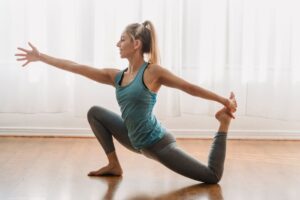
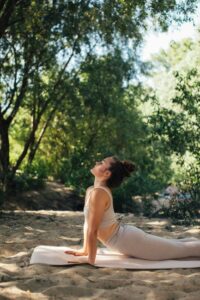
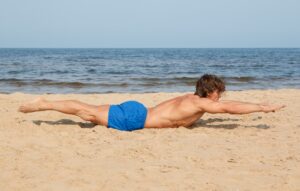
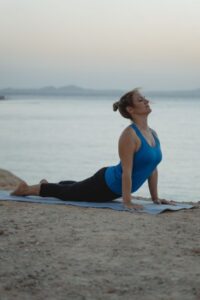
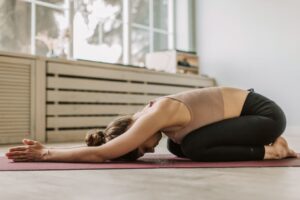
Prepare with cobra, locust, upward-facing dog and bridge, and stretch the front thighs in a low lunge. The Bihar School recommends following bow with a forward bend; Sivananda rests in child’s pose. Bow prepares for camel and wheel.
Where it is taught
Bow is in the Sivananda twelve basic asanas, Light on Yoga (Iyengar), the Bihar School system, the Ashtanga intermediate series (with side bow), the 26-posture hot yoga sequence and many hatha and vinyasa classes.