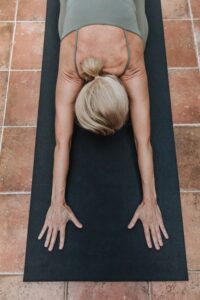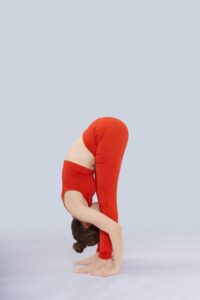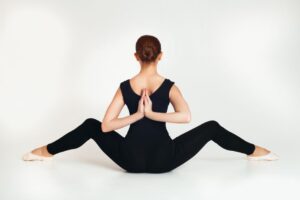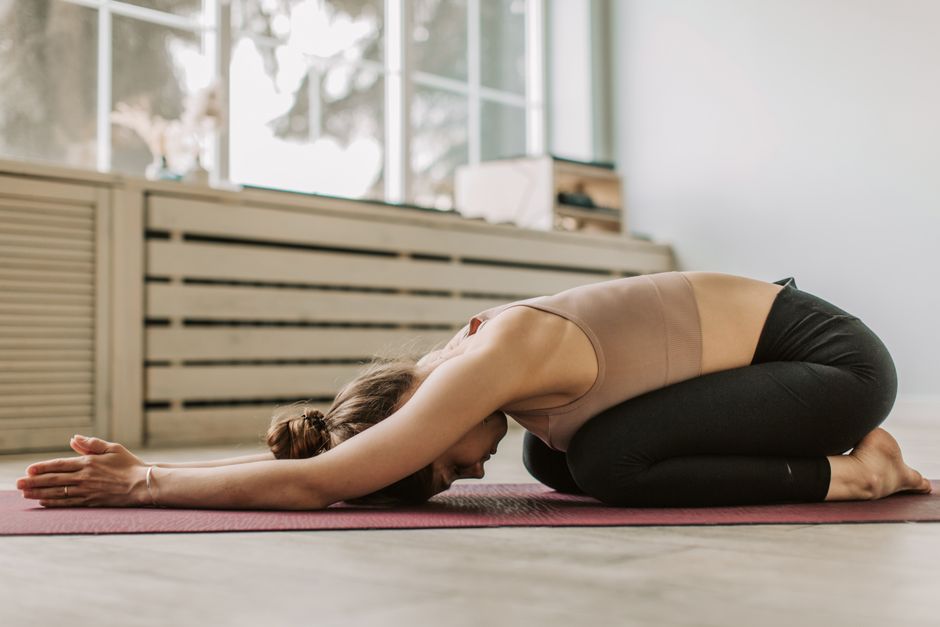
In short: child’s pose is a kneeling fold: you sit back on your heels, lay the chest on or between the thighs and rest the forehead on the floor, with the arms by your sides or stretched forward. It is the pose most teachers offer whenever you need a break. Pad the knees, widen them if the belly or hips feel squashed, and support the head if it does not reach the floor.
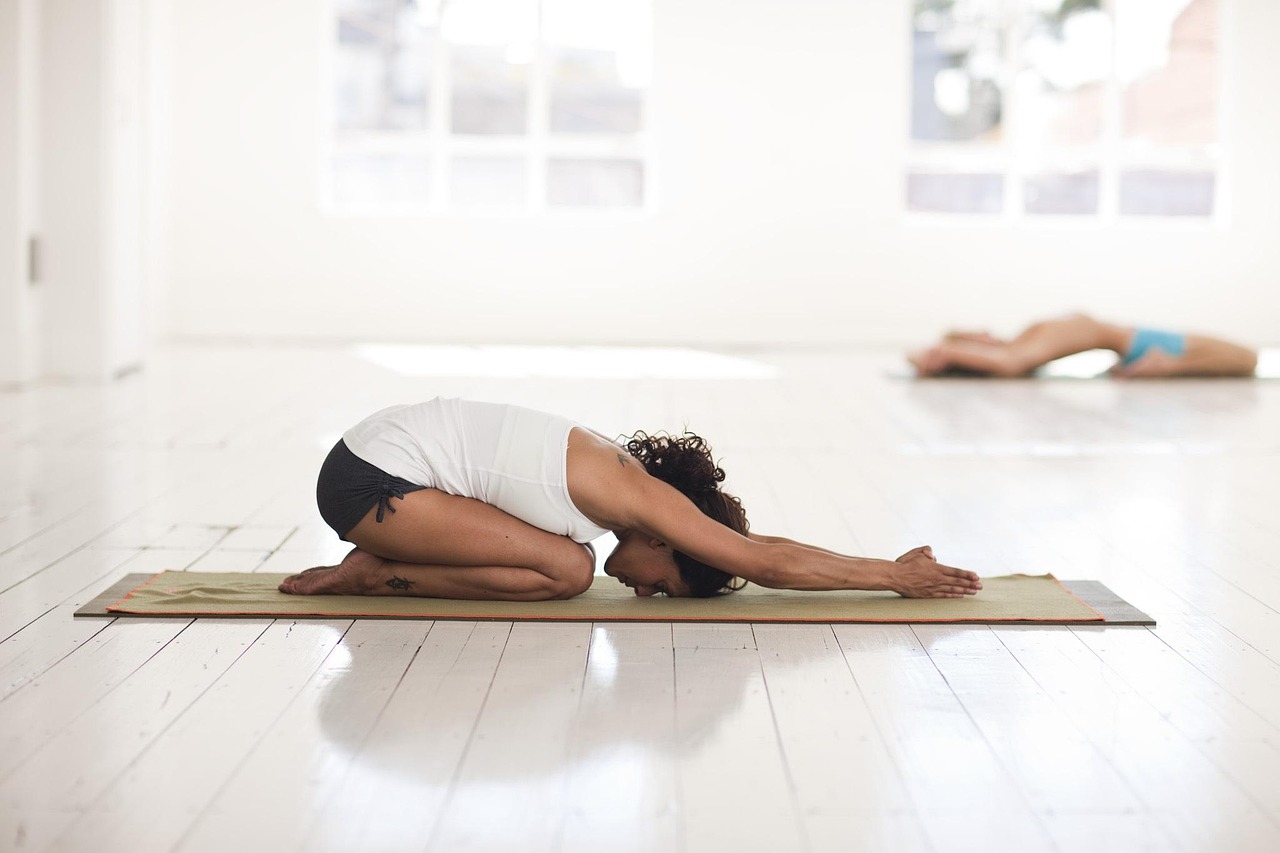
Child’s pose is often the first resting pose people learn, and it is easy to treat it as “doing nothing”. Teachers tend to see it differently: it is a moment to stop, feel the breath in the back of the body and come back to the practice on your own terms. Below we explain the name, the three common versions (classic, extended and supported), the precautions and where it fits in a class.
About the name
The Sanskrit name used in most modern classes is Bālāsana, from bāla, child, and āsana, seat or posture (see what asana means). It is a modern pose name: it does not appear in the medieval hatha texts or in Light on Yoga, and it became standard through 20th-century teaching. You may also hear Garbhāsana (“womb pose”); Bernie Clark lists it next to Balasana as the yang equivalent of yin child’s pose. Be aware that in Light on Yoga the similar name Garbha Piṇḍāsana belongs to a completely different posture, the embryo in the womb, an advanced pose with the arms threaded through lotus legs. The Bihar School teaches a related kneeling fold called Śaśāṅkāsana, the hare or moon pose.
How to make it work
Start on hands and knees, bring the big toes together and sit back toward the heels. How wide you take the knees changes the pose: knees together give a rounder fold with the belly on the thighs, which some people like and others find cramped; knees wider, as Yoga International suggests, make room for the belly and ribs and usually let the hips sink further. Lay the forehead down. Yoga Journal’s cue is to tuck the chin slightly so the back of the neck stays long, and to let the weight of the shoulders spread the shoulder blades across the back.
Arms alongside the body, palms up, is the version the Sivananda centres teach: it lets the shoulders go completely. Stay 30 seconds to a few minutes as a resting pose; the Sivananda centres hold it for 30 to 60 seconds as a counterpose to backbends such as cobra, and Bernie Clark gives three to five minutes when it is held as a yin pose in its own right. Breathe slowly and notice the back ribs widen on each inhalation.
Extended child’s pose (wide-knee child’s pose)
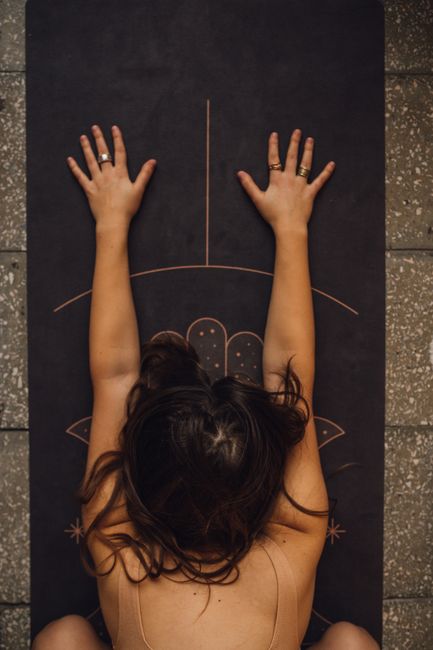
In extended child’s pose you walk the hands forward to the front of the mat, usually with the knees wide and the big toes touching. Yoga Journal notes that this version is not entirely passive: the arms reach, so the back, shoulders and arms are gently stretched. It is common in vinyasa classes as a rest between flows, and it is the starting shape for extended puppy pose, where the hips lift up over the knees. If the shoulders pinch with the arms forward, widen the hands or bring the arms back alongside the body. Yin teachers call the wide-knee version with the arms forward “tadpole”, the first stage of yin frog.
Supported child’s pose (on a bolster)
For a fully restful version, place a bolster lengthwise between the knees and lie the chest and belly on it, turning the head to one side. Yoga Journal adds a rolled blanket or pillow between the backs of the thighs and the calves if the knees complain, and suggests turning the head to the other cheek halfway through so the neck stretches evenly. A block or folded blanket under the forehead is the simpler option when the head does not reach the floor. In restorative classes this version is held for several minutes. Some teachers call it Salamba Balasana, but that is modern usage rather than an established name.
Precautions in plain words
The knees bend fully in child’s pose. With a knee injury, place a folded blanket in the crease of the knees before sitting back, as Yoga Journal suggests, or use a bolster under the chest so the hips stay higher. A blanket under the ankles helps if the tops of the feet hurt. Bernie Clark lists pregnancy and diarrhoea as reasons to skip the knees-together version; in pregnancy, keep the knees wide so the belly has room, and follow your health care provider’s advice. It can be uncomfortable straight after a meal. If your head feels heavy or the neck strains, put something under the forehead. This page is general information, not individual advice.
Preparation, what comes next and where it is taught
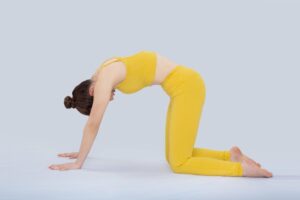
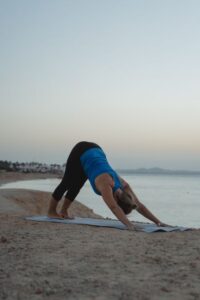
Child’s pose needs little preparation; a few rounds of cat-cow or a moment in thunderbolt pose (sitting on the heels) are enough. From here you can move to downward-facing dog, back onto hands and knees, or up to kneeling. It is used in practically every style: as a counterpose after backbends and after headstand in Sivananda classes, as a rest in vinyasa, and with props in restorative and yin yoga. Pair it with slow diaphragmatic breathing.