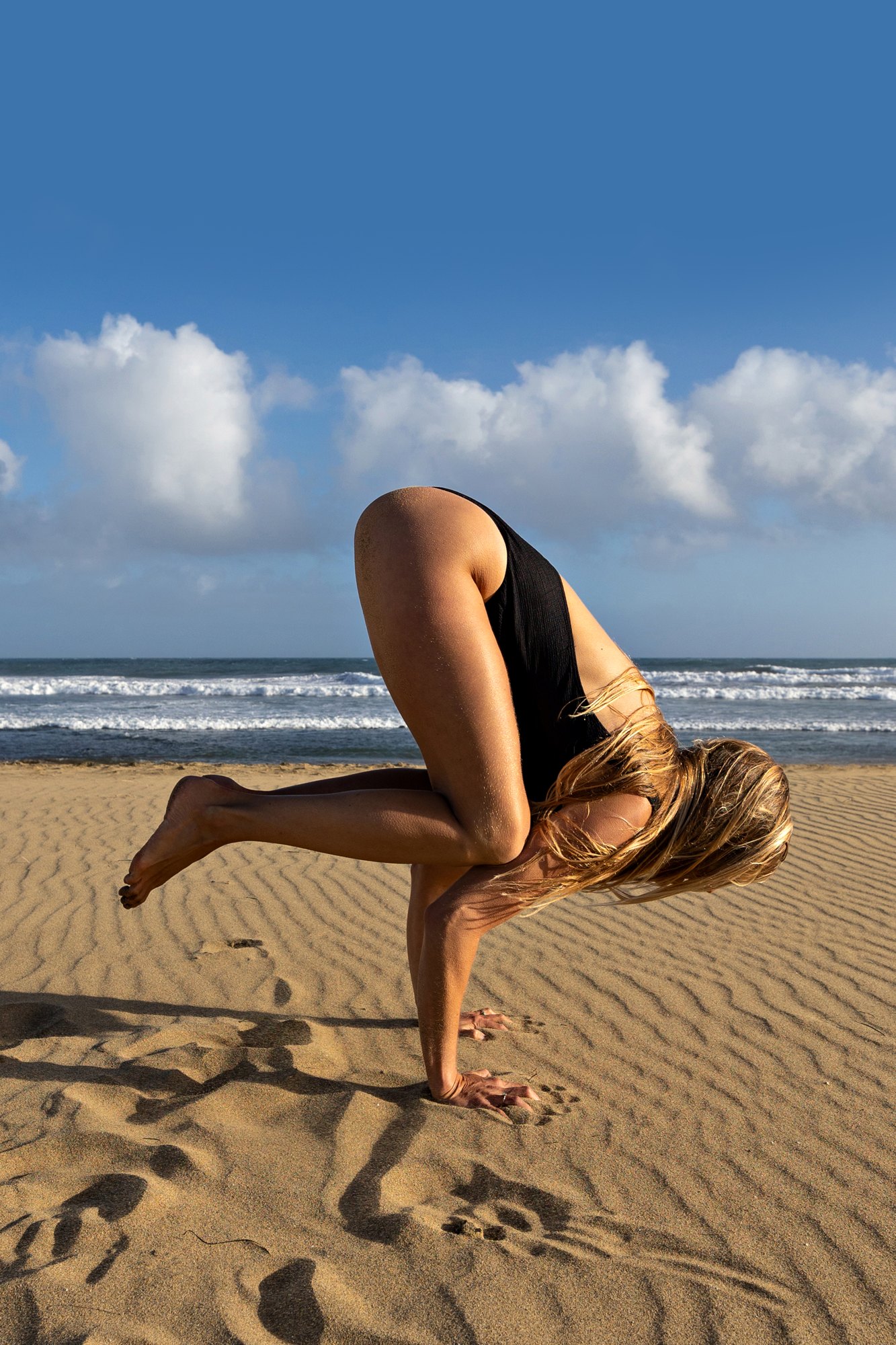
In short: poses grouped as beginner, intermediate and advanced, then by the skills they need first. The level describes the full pose; most pages give an easier version. A pose being “basic” in a tradition does not make it beginner-friendly, so read the prerequisites and precautions on each page.
Difficulty in yoga is personal. Hip structure, past injuries, age, strength and how long you have practised change what a pose asks of you, and a pose that one person finds restful can strain another. Our levels are a guide to where most people start:
- Beginner: accessible to most people new to yoga, with the easier options on the page.
- Intermediate: needs some strength, flexibility, balance or body awareness built in simpler poses first.
- Advanced: deep backbends, demanding balances, inversions on the head or shoulders, lotus-based and leg-behind-head poses. Learn these with a qualified teacher, and skip them if a precaution on the page applies to you.
Traditions use words like “primary” or “basic” differently. The Ashtanga primary series is the first series in that system, not a beginners’ class, and the Sivananda 12 basic postures include headstand and shoulderstand. See traditional practice series for how each tradition introduces them. If you are new, the beginner pathway gives an order to learn in.
Poses by level
Beginner 70 poses
- Ankle Stretch (Yin)
- Banana (Yin)
- Bharadvaja’s Twist Bharadvājāsana
- Bird Dog
- Bound Angle Pose Baddha Koṇāsana
- Bridge Pose Setu Bandha Sarvāṅgāsana
- Butterfly (Yin)
- Cat-Cow Marjaryasana-Bitilasana
- Caterpillar (Yin)
- Chair Pose Utkaṭāsana
- Child's Pose Bālāsana
- Cobra Pose Bhujaṅgāsana
- Corpse Pose Śavāsana
- Crocodile Pose Makarāsana
- Dangling (Yin)
- Deer (Yin)
- Downward Dog Adho Mukha Śvānāsana
- Dragon (Yin)
- Dragonfly (Yin)
- Easy Pose Sukhāsana
- Eight-Point Salute Aṣṭāṅga Namaskāra
- Equestrian Pose Aśva Sañcalanāsana
- Extended Puppy Pose
- Extended Side Angle Utthita Pārśvakoṇāsana
- Five-Pointed Star
- Garland Pose Mālāsana
- Goddess Pose
- Gracious Pose Bhadrāsana
- Half Butterfly (Yin)
- Half Lord of the Fishes Ardha Matsyendrāsana
- Half Split
- Half Standing Forward Fold Ardha Uttānāsana
- Happy Baby Pose Ānanda Bālāsana
- Head-to-Knee Pose Jānu Śīrṣāsana
- Legs Up the Wall
- Lion Pose Siṃhāsana
- Locust Pose Śalabhāsana
- Low Lunge Āñjaneyāsana
- Melting Heart (Yin)
- Mountain Pose Tāḍāsana
- Plank Pose
- Prayer Pose Praṇāmāsana
- Pyramid Pose Pārśvottānāsana
- Raised Arms with Backbend Hasta Uttānāsana
- Reclining Bound Angle Supta Baddha Koṇāsana
- Reclining Figure Four
- Reclining Hand-to-Big-Toe Pose Supta Pādāṅguṣṭhāsana
- Reclining Spinal Twist
- Reverse Warrior
- Revolved Easy Seat
- Seated Forward Bend Paścimottānāsana
- Sphinx (Yin)
- Sphinx Pose
- Staff Pose Daṇḍāsana
- Standing Forward Fold Uttānāsana
- Standing Side Bend
- Supported Bridge
- Supported Fish
- Swaying Palm Tree Tiryaka Tāḍāsana
- Tabletop
- Thunderbolt Pose Vajrāsana
- Toe Squat (Yin)
- Tree Pose Vṛkṣāsana
- Triangle Pose Utthita Trikoṇāsana
- Twisted Roots (Yin)
- Upward Salute Ūrdhva Hastāsana
- Warrior I Vīrabhadrāsana I
- Warrior II Vīrabhadrāsana II
- Wide-Legged Forward Fold Prasārita Pādottānāsana
- Wind-Relieving Pose Pavanamuktāsana
Intermediate 58 poses
- Accomplished Pose Siddhāsana
- Auspicious Pose Svastikāsana
- Big Toe Pose Pādāṅguṣṭhāsana
- Boat Pose Paripūrṇa Nāvāsana
- Both Big Toes Pose Ubhaya Pādāṅguṣṭhāsana
- Bow Pose Dhanurāsana
- Camel Pose Uṣṭrāsana
- Chaturanga Caturaṅga Daṇḍāsana
- Cow Face Pose Gomukhāsana
- Crow Pose Kākāsana
- Dancer Pose Naṭarājāsana
- Dolphin Pose
- Eagle Pose Garuḍāsana
- Extended Hand-to-Big-Toe Pose Utthita Hasta Pādāṅguṣṭhāsana
- Fire Log Pose Agnistambhāsana
- Fish Pose Matsyāsana
- Frog (Yin)
- Half Lord of the Fishes Ardha Matsyendrāsana
- Half Lotus Ardha Padmāsana
- Half Moon Pose Ardha Candrāsana
- Hands Under Feet Pose Pādahastāsana
- Hero Pose Vīrāsana
- Heron Pose Krauñcāsana
- High Lunge
- Humble Warrior
- Lizard Pose
- Marichi’s Pose (A and B) Marīcyāsana A
- Marichi’s Twist (C and D) Marīcyāsana C
- Pigeon Pose Eka Pāda Rājakapotāsana
- Plow Pose Halāsana
- Reclining Hero Supta Vīrāsana
- Revolved Abdomen Pose Jaṭhara Parivartanāsana
- Revolved Chair Pose Parivṛtta Utkaṭāsana
- Revolved Half Moon Parivṛtta Ardha Candrāsana
- Revolved Head-to-Knee Pose Parivṛtta Jānu Śīrṣāsana
- Revolved Lunge
- Revolved Side Angle Parivṛtta Pārśvakoṇāsana
- Revolved Triangle Parivṛtta Trikoṇāsana
- Saddle (Yin)
- Seated Wide-Angle Forward Bend Upaviṣṭha Koṇāsana
- Shoelace (Yin)
- Side Lunge Skandāsana
- Side Plank Vasiṣṭhāsana
- Side-Reclining Leg Lift Anantāsana
- Snail (Yin)
- Square (Yin)
- Standing Figure Four
- Standing Split Ūrdhva Prasārita Ekapādāsana
- Swan (Yin)
- Three-Limbed Forward Bend Triaṅga Mukhaikapāda Paścimottānāsana
- Upward Extended Legs Ūrdhva Prasārita Pādāsana
- Upward Plank Pūrvottānāsana
- Upward-Facing Dog Ūrdhva Mukha Śvānāsana
- Upward-Facing Intense Stretch Ūrdhva Mukha Paścimottānāsana
- Viparita Karani Viparīta Karaṇī
- Warrior III Vīrabhadrāsana III
- Wide-Knee Frog
- Wild Thing
Advanced 41 poses
- Bird of Paradise
- Both Legs Behind the Head Dvi Pāda Śīrṣāsana
- Bound Lotus Baddha Padmāsana
- Crane Pose Bakāsana
- Ear Pressure Pose Karṇapīḍāsana
- Eight-Angle Pose Aṣṭāvakrāsana
- Embryo in the Womb Garbha Piṇḍāsana
- Firefly Pose Ṭiṭṭibhāsana
- Flying Pigeon Eka Pāda Gālavāsana
- Forearm Stand Piñcha Mayūrāsana
- Frog Pose (Bhekasana) Bhekāsana
- Full Lord of the Fishes Matsyendrāsana
- Half-Bound Lotus Seated Forward Bend Ardha Baddha Padma Paścimottānāsana
- Half-Bound Lotus Standing Forward Bend Ardha Baddha Padmottānāsana
- Handstand Adho Mukha Vṛkṣāsana
- Kapotasana Kapotāsana
- Little Thunderbolt Laghu Vajrāsana
- Lotus Pose Padmāsana
- Monkey Pose (Full Split) Hanumānāsana
- Noose Pose Pāśāsana
- One Leg Behind the Head Eka Pāda Śīrṣāsana
- One-Legged King Pigeon Eka Pāda Rājakapotāsana
- Peacock Pose Mayūrāsana
- Pendant Pose Lolāsana
- Reclining Tortoise Supta Kūrmāsana
- Rooster Pose Kukkuṭāsana
- Sage Koundinya’s Pose Eka Pāda Kauṇḍinyāsana I
- Sage Visvamitra’s Pose Viśvāmitrāsana
- Scale Pose Tolāsana
- Scorpion Pose Vṛścikāsana
- Shoulder-Pressing Pose Bhujapīḍāsana
- Side Crow Pose Pārśva Bakāsana
- Supported Headstand Sālamba Śīrṣāsana
- Supported Shoulderstand Sālamba Sarvāṅgāsana
- Toe Stand
- Tortoise Pose Kūrmāsana
- Tripod Headstand Sālamba Śīrṣāsana II
- Two-Legged Inverted Staff Dvi Pāda Viparīta Daṇḍāsana
- Wheel Pose Ūrdhva Dhanurāsana
- Yoga Seal Pose Yoga Mudrāsana
- Yoga Sleep Pose (Yoganidrasana) Yoganidrāsana
Poses by prerequisite skill
What to be comfortable with before trying a pose: for example, steady weight on the hands before arm balances, or prepared backbends before wheel.
Getting down to and up from the floor 21 poses
- Accomplished Pose Siddhāsana
- Auspicious Pose Svastikāsana
- Bound Angle Pose Baddha Koṇāsana
- Cobra Pose Bhujaṅgāsana
- Easy Pose Sukhāsana
- Equestrian Pose Aśva Sañcalanāsana
- Gracious Pose Bhadrāsana
- Half Lotus Ardha Padmāsana
- Legs Up the Wall
- Locust Pose Śalabhāsana
- Low Lunge Āñjaneyāsana
- Monkey Pose (Full Split) Hanumānāsana
- Reclining Bound Angle Supta Baddha Koṇāsana
- Reclining Hand-to-Big-Toe Pose Supta Pādāṅguṣṭhāsana
- Seated Wide-Angle Forward Bend Upaviṣṭha Koṇāsana
- Sphinx Pose
- Staff Pose Daṇḍāsana
- Supported Bridge
- Supported Fish
- Thunderbolt Pose Vajrāsana
- Wide-Knee Frog
Comfortable weight on the hands 25 poses
- Bird Dog
- Crane Pose Bakāsana
- Eight-Angle Pose Aṣṭāvakrāsana
- Eight-Point Salute Aṣṭāṅga Namaskāra
- Firefly Pose Ṭiṭṭibhāsana
- Flying Pigeon Eka Pāda Gālavāsana
- Hands Under Feet Pose Pādahastāsana
- Handstand Adho Mukha Vṛkṣāsana
- Lizard Pose
- Peacock Pose Mayūrāsana
- Pendant Pose Lolāsana
- Plank Pose
- Rooster Pose Kukkuṭāsana
- Sage Koundinya’s Pose Eka Pāda Kauṇḍinyāsana I
- Sage Visvamitra’s Pose Viśvāmitrāsana
- Scale Pose Tolāsana
- Shoulder-Pressing Pose Bhujapīḍāsana
- Side Crow Pose Pārśva Bakāsana
- Side Plank Vasiṣṭhāsana
- Tabletop
- Tripod Headstand Sālamba Śīrṣāsana II
- Upward Plank Pūrvottānāsana
- Upward-Facing Dog Ūrdhva Mukha Śvānāsana
- Wheel Pose Ūrdhva Dhanurāsana
- Wild Thing
Hamstring length 36 poses
- Big Toe Pose Pādāṅguṣṭhāsana
- Bird of Paradise
- Both Big Toes Pose Ubhaya Pādāṅguṣṭhāsana
- Ear Pressure Pose Karṇapīḍāsana
- Eight-Angle Pose Aṣṭāvakrāsana
- Extended Hand-to-Big-Toe Pose Utthita Hasta Pādāṅguṣṭhāsana
- Firefly Pose Ṭiṭṭibhāsana
- Half Moon Pose Ardha Candrāsana
- Half Split
- Half-Bound Lotus Seated Forward Bend Ardha Baddha Padma Paścimottānāsana
- Half-Bound Lotus Standing Forward Bend Ardha Baddha Padmottānāsana
- Hands Under Feet Pose Pādahastāsana
- Head-to-Knee Pose Jānu Śīrṣāsana
- Heron Pose Krauñcāsana
- Marichi’s Pose (A and B) Marīcyāsana A
- Monkey Pose (Full Split) Hanumānāsana
- One Leg Behind the Head Eka Pāda Śīrṣāsana
- Plow Pose Halāsana
- Pyramid Pose Pārśvottānāsana
- Reclining Tortoise Supta Kūrmāsana
- Revolved Half Moon Parivṛtta Ardha Candrāsana
- Revolved Head-to-Knee Pose Parivṛtta Jānu Śīrṣāsana
- Revolved Triangle Parivṛtta Trikoṇāsana
- Sage Koundinya’s Pose Eka Pāda Kauṇḍinyāsana I
- Sage Visvamitra’s Pose Viśvāmitrāsana
- Seated Forward Bend Paścimottānāsana
- Seated Wide-Angle Forward Bend Upaviṣṭha Koṇāsana
- Side-Reclining Leg Lift Anantāsana
- Standing Split Ūrdhva Prasārita Ekapādāsana
- Three-Limbed Forward Bend Triaṅga Mukhaikapāda Paścimottānāsana
- Tortoise Pose Kūrmāsana
- Triangle Pose Utthita Trikoṇāsana
- Upward Extended Legs Ūrdhva Prasārita Pādāsana
- Upward-Facing Intense Stretch Ūrdhva Mukha Paścimottānāsana
- Wide-Legged Forward Fold Prasārita Pādottānāsana
- Yoga Sleep Pose (Yoganidrasana) Yoganidrāsana
Hip rotation range 32 poses
- Accomplished Pose Siddhāsana
- Auspicious Pose Svastikāsana
- Bird of Paradise
- Both Legs Behind the Head Dvi Pāda Śīrṣāsana
- Bound Lotus Baddha Padmāsana
- Cow Face Pose Gomukhāsana
- Eight-Angle Pose Aṣṭāvakrāsana
- Fire Log Pose Agnistambhāsana
- Flying Pigeon Eka Pāda Gālavāsana
- Frog (Yin)
- Full Lord of the Fishes Matsyendrāsana
- Gracious Pose Bhadrāsana
- Half Lotus Ardha Padmāsana
- Half-Bound Lotus Seated Forward Bend Ardha Baddha Padma Paścimottānāsana
- Half-Bound Lotus Standing Forward Bend Ardha Baddha Padmottānāsana
- Head-to-Knee Pose Jānu Śīrṣāsana
- Lizard Pose
- Marichi’s Twist (C and D) Marīcyāsana C
- One Leg Behind the Head Eka Pāda Śīrṣāsana
- One-Legged King Pigeon Eka Pāda Rājakapotāsana
- Reclining Tortoise Supta Kūrmāsana
- Revolved Head-to-Knee Pose Parivṛtta Jānu Śīrṣāsana
- Sage Visvamitra’s Pose Viśvāmitrāsana
- Shoelace (Yin)
- Shoulder-Pressing Pose Bhujapīḍāsana
- Side Lunge Skandāsana
- Square (Yin)
- Standing Figure Four
- Swan (Yin)
- Tortoise Pose Kūrmāsana
- Wide-Knee Frog
- Yoga Sleep Pose (Yoganidrasana) Yoganidrāsana
Comfortable deep knee bend 23 poses
- Ankle Stretch (Yin)
- Bow Pose Dhanurāsana
- Chair Pose Utkaṭāsana
- Child's Pose Bālāsana
- Cow Face Pose Gomukhāsana
- Dragon (Yin)
- Eagle Pose Garuḍāsana
- Frog Pose (Bhekasana) Bhekāsana
- Garland Pose Mālāsana
- Goddess Pose
- Hero Pose Vīrāsana
- Heron Pose Krauñcāsana
- Lion Pose Siṃhāsana
- Noose Pose Pāśāsana
- Reclining Hero Supta Vīrāsana
- Revolved Chair Pose Parivṛtta Utkaṭāsana
- Saddle (Yin)
- Side Lunge Skandāsana
- Standing Figure Four
- Three-Limbed Forward Bend Triaṅga Mukhaikapāda Paścimottānāsana
- Thunderbolt Pose Vajrāsana
- Toe Squat (Yin)
- Toe Stand
Arms overhead with ease 25 poses
- Banana (Yin)
- Bird of Paradise
- Chair Pose Utkaṭāsana
- Cow Face Pose Gomukhāsana
- Dolphin Pose
- Extended Puppy Pose
- Forearm Stand Piñcha Mayūrāsana
- Full Lord of the Fishes Matsyendrāsana
- Half-Bound Lotus Seated Forward Bend Ardha Baddha Padma Paścimottānāsana
- Handstand Adho Mukha Vṛkṣāsana
- Kapotasana Kapotāsana
- Marichi’s Pose (A and B) Marīcyāsana A
- Marichi’s Twist (C and D) Marīcyāsana C
- Melting Heart (Yin)
- Noose Pose Pāśāsana
- One-Legged King Pigeon Eka Pāda Rājakapotāsana
- Raised Arms with Backbend Hasta Uttānāsana
- Reclining Tortoise Supta Kūrmāsana
- Reverse Warrior
- Standing Side Bend
- Swaying Palm Tree Tiryaka Tāḍāsana
- Upward Salute Ūrdhva Hastāsana
- Warrior I Vīrabhadrāsana I
- Wheel Pose Ūrdhva Dhanurāsana
- Yoga Seal Pose Yoga Mudrāsana
Core strength 30 poses
- Boat Pose Paripūrṇa Nāvāsana
- Both Big Toes Pose Ubhaya Pādāṅguṣṭhāsana
- Both Legs Behind the Head Dvi Pāda Śīrṣāsana
- Crane Pose Bakāsana
- Eight-Angle Pose Aṣṭāvakrāsana
- Embryo in the Womb Garbha Piṇḍāsana
- Firefly Pose Ṭiṭṭibhāsana
- Flying Pigeon Eka Pāda Gālavāsana
- Forearm Stand Piñcha Mayūrāsana
- Handstand Adho Mukha Vṛkṣāsana
- Little Thunderbolt Laghu Vajrāsana
- Peacock Pose Mayūrāsana
- Pendant Pose Lolāsana
- Plank Pose
- Revolved Abdomen Pose Jaṭhara Parivartanāsana
- Revolved Half Moon Parivṛtta Ardha Candrāsana
- Sage Koundinya’s Pose Eka Pāda Kauṇḍinyāsana I
- Scale Pose Tolāsana
- Scorpion Pose Vṛścikāsana
- Shoulder-Pressing Pose Bhujapīḍāsana
- Side Crow Pose Pārśva Bakāsana
- Side Plank Vasiṣṭhāsana
- Side-Reclining Leg Lift Anantāsana
- Supported Headstand Sālamba Śīrṣāsana
- Supported Shoulderstand Sālamba Sarvāṅgāsana
- Tripod Headstand Sālamba Śīrṣāsana II
- Upward Extended Legs Ūrdhva Prasārita Pādāsana
- Upward-Facing Intense Stretch Ūrdhva Mukha Paścimottānāsana
- Viparita Karani Viparīta Karaṇī
- Warrior III Vīrabhadrāsana III
Arm and shoulder strength 23 poses
- Crane Pose Bakāsana
- Dolphin Pose
- Eight-Angle Pose Aṣṭāvakrāsana
- Firefly Pose Ṭiṭṭibhāsana
- Flying Pigeon Eka Pāda Gālavāsana
- Forearm Stand Piñcha Mayūrāsana
- Handstand Adho Mukha Vṛkṣāsana
- Peacock Pose Mayūrāsana
- Pendant Pose Lolāsana
- Rooster Pose Kukkuṭāsana
- Sage Koundinya’s Pose Eka Pāda Kauṇḍinyāsana I
- Sage Visvamitra’s Pose Viśvāmitrāsana
- Scale Pose Tolāsana
- Scorpion Pose Vṛścikāsana
- Side Crow Pose Pārśva Bakāsana
- Side Plank Vasiṣṭhāsana
- Supported Headstand Sālamba Śīrṣāsana
- Tripod Headstand Sālamba Śīrṣāsana II
- Two-Legged Inverted Staff Dvi Pāda Viparīta Daṇḍāsana
- Upward Plank Pūrvottānāsana
- Upward-Facing Dog Ūrdhva Mukha Śvānāsana
- Wheel Pose Ūrdhva Dhanurāsana
- Wild Thing
Standing balance 16 poses
- Bird of Paradise
- Dancer Pose Naṭarājāsana
- Eagle Pose Garuḍāsana
- Extended Hand-to-Big-Toe Pose Utthita Hasta Pādāṅguṣṭhāsana
- Half Moon Pose Ardha Candrāsana
- Half-Bound Lotus Standing Forward Bend Ardha Baddha Padmottānāsana
- High Lunge
- Revolved Half Moon Parivṛtta Ardha Candrāsana
- Revolved Lunge
- Revolved Side Angle Parivṛtta Pārśvakoṇāsana
- Revolved Triangle Parivṛtta Trikoṇāsana
- Standing Figure Four
- Standing Split Ūrdhva Prasārita Ekapādāsana
- Toe Stand
- Tree Pose Vṛkṣāsana
- Warrior III Vīrabhadrāsana III
Prepared for backbends 14 poses
- Bow Pose Dhanurāsana
- Camel Pose Uṣṭrāsana
- Dancer Pose Naṭarājāsana
- Fish Pose Matsyāsana
- Frog Pose (Bhekasana) Bhekāsana
- Kapotasana Kapotāsana
- Little Thunderbolt Laghu Vajrāsana
- One-Legged King Pigeon Eka Pāda Rājakapotāsana
- Saddle (Yin)
- Scorpion Pose Vṛścikāsana
- Two-Legged Inverted Staff Dvi Pāda Viparīta Daṇḍāsana
- Upward-Facing Dog Ūrdhva Mukha Śvānāsana
- Wheel Pose Ūrdhva Dhanurāsana
- Wild Thing
Experience with inversions (with a teacher) 11 poses
- Ear Pressure Pose Karṇapīḍāsana
- Forearm Stand Piñcha Mayūrāsana
- Handstand Adho Mukha Vṛkṣāsana
- Plow Pose Halāsana
- Scorpion Pose Vṛścikāsana
- Snail (Yin)
- Supported Headstand Sālamba Śīrṣāsana
- Supported Shoulderstand Sālamba Sarvāṅgāsana
- Tripod Headstand Sālamba Śīrṣāsana II
- Two-Legged Inverted Staff Dvi Pāda Viparīta Daṇḍāsana
- Viparita Karani Viparīta Karaṇī
Neck awareness and control 18 poses
- Both Legs Behind the Head Dvi Pāda Śīrṣāsana
- Bridge Pose Setu Bandha Sarvāṅgāsana
- Camel Pose Uṣṭrāsana
- Ear Pressure Pose Karṇapīḍāsana
- Fish Pose Matsyāsana
- Kapotasana Kapotāsana
- Little Thunderbolt Laghu Vajrāsana
- One Leg Behind the Head Eka Pāda Śīrṣāsana
- Plow Pose Halāsana
- Reclining Tortoise Supta Kūrmāsana
- Scorpion Pose Vṛścikāsana
- Snail (Yin)
- Supported Headstand Sālamba Śīrṣāsana
- Supported Shoulderstand Sālamba Sarvāṅgāsana
- Tripod Headstand Sālamba Śīrṣāsana II
- Two-Legged Inverted Staff Dvi Pāda Viparīta Daṇḍāsana
- Viparita Karani Viparīta Karaṇī
- Yoga Sleep Pose (Yoganidrasana) Yoganidrāsana
Lotus or half lotus without knee strain 9 poses
- Bound Lotus Baddha Padmāsana
- Embryo in the Womb Garbha Piṇḍāsana
- Full Lord of the Fishes Matsyendrāsana
- Half-Bound Lotus Seated Forward Bend Ardha Baddha Padma Paścimottānāsana
- Half-Bound Lotus Standing Forward Bend Ardha Baddha Padmottānāsana
- Rooster Pose Kukkuṭāsana
- Scale Pose Tolāsana
- Toe Stand
- Yoga Seal Pose Yoga Mudrāsana
Frequently asked questions
Is the Ashtanga primary series for beginners?
Primary means it is the first series in the Ashtanga system, not that every posture in it suits beginners. Many include lotus, binds and jumps that take time and a teacher to learn.
Sources
- Yoga: What You Need To Know (safety; newcomers avoid extreme practices such as headstands, shoulder stands, lotus), National Center for Complementary and Integrative Health (NIH) (accessed October 6, 2026)
Facts checked on October 6, 2026
Related guides
 Beginner Yoga Pathway: what to learn first, step by stepA learning order for beginners in seven stages, from mountain pose and cat-cow to first sequences…
 Sanskrit Yoga Pose Names A to ZSanskrit names of yoga poses from A to Z with their English names and common spellings,…
 Yoga Pose Families: standing, seated, twists, backbends and moreYoga poses grouped by family (standing, balancing, seated, forward bends, hip openers, twists, backbends, core, arm…
 Yoga Poses A to Z: every pose in our libraryEvery yoga pose in our library from A to Z, with other English names pointing to…